

By Tenzin Nyidon
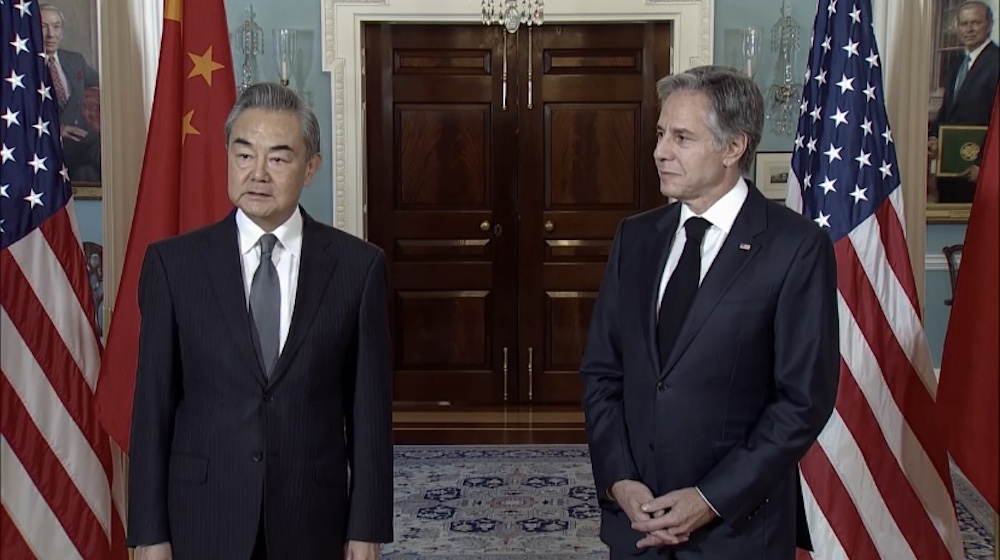
DHARAMSHALA, Oct 31: In a pivotal seven-hour meeting that took place on October 26-27, 2023, in Washington D.C., United States Secretary of State Antony J. Blinken raised a multitude of concerns with Chinese Foreign Minister Wang Yi. The issues discussed during the meeting focused on human rights violations in East Turkestan (Xinjiang), Tibet, and Hong Kong, as well as individual cases of concern.
Secretary Blinken expressed profound apprehension regarding human rights abuses in East Turkestan (Xinjiang), Tibet, and Hong Kong. “The Secretary raised concerns about PRC human rights violations in Xinjiang, Tibet, and Hong Kong, as well as individual cases of concern,” the meeting’s official statement, released by the U.S. Department of State on October 27 stated.
The meeting saw both sides engage in a comprehensive discussion covering various bilateral, regional, and global topics. “The two sides discussed the importance of working together to address other shared challenges, including climate, noting the importance of an ambitious outcome at the upcoming COP28, as well as global macroeconomic stability, food security, public health, and counter narcotics,” the statement revealed.
On October 27, the bipartisan Congressional-Executive Commission on China (CECC) issued a statement emphasising the expectation that Biden administration officials who engage in meetings with Chinese Foreign Minister Wang Yi must prioritise the discussion of critical human rights issues, while raising the cases of Uyghurs, Hong Kongers, Tibetans, and other political prisoners who have been unjustly detained in China.
The letter by Representative Christopher Smith and Senator Jeff Merkley asked Secretary of Commerce Gina Raimondo, Secretary of the Treasury Janet Yellen and Secretary of State Antony Blinken to call for the imposition of export controls on technology utilised by People’s Republic of China’s Public Security Bureaus and other entities in Tibet for collecting biometric data for political identification and racial profiling.
The letter further suggested that the secretaries consider implementing measures, such as “Global Magnitsky sanctions” and “visa restrictions” targeting officials’ in Tibetan areas complicity in human rights abuses and those who are found to be involved in the extensive collection of biometric data and the coercive separation of Tibetan children from their parents. Global Magnitsky sanctions, authorised by the Global Magnitsky Human Rights Accountability Act, allow the U.S. government to impose sanctions on individuals or entities found to be involved in human rights violations.

