


By Choekyi Lhamo
DHARAMSHALA, Dec. 22: Tibetan activist and poet Tenzin Tsundue reached Dharamshala on Tuesday after completing his four-month long campaign where he travelled through five Indian Himalayan states in 127 days using local transport and walking through remote regions across the border. “‘Walking the Himalayas’ is my travel plan to journey through the Indian Himalayas to create more awareness about the 70 years of Chinese occupation of Tibet and its impact on Indian Himalayas, also the growing Chinese security threats on India,” the activist said in the press release on Wednesday.
Known for his poems that thematically revolve around freedom and longing for his homeland, the Rangzen (independence) activist has been on the journey from August to December this year talking to communities big and small and screening the movie ‘The Great Escape of the Dalai Lama’ to the Indian public. The 46-year-old screened the film at the Club House in McLeod Ganj to local Indians and Tibetans, where he urged the public to actively engage in public discourse to counter Chinese advances on the border.
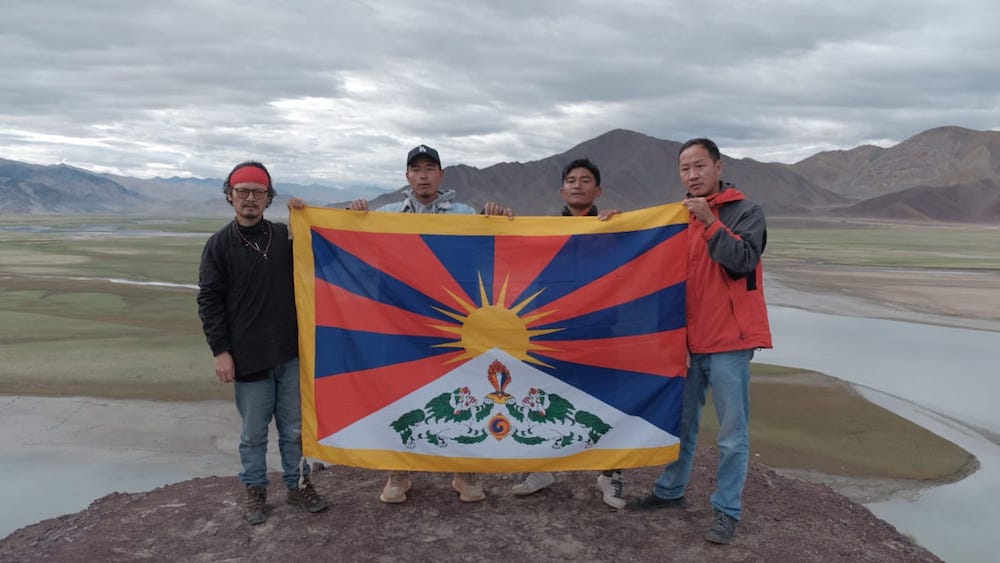
“Although the government and the Indian army are doing everything necessary, I observed on this journey that the common people in the border regions have little to no awareness about China’s expansionist policies, and its current activities across the borders,” he further remarked. His campaign focused on meeting with the public and to apprise them of the cultural heritage that Tibetans and Himalayan people shared before China invaded Tibet.
“There are tens of thousands of people in the Indian Himalayas who were once subjects of Tibet and they say there are many more inside Tibet who once lived in the Indian Himalayas. There has been a partition no one is talking about in the severed Himalayas,” the press release detailed his observations on the journey.
Tsundue covered over 20,000 km distance by touring over different regions across India, and has been documenting the campaign on his social media handles illustrated through pictures. He further urged the local community in Dharamshala, as he did throughout his campaign, to refer to the border as Indo-Tibet instead of Indo-China border, citing the great cultural lineage between the two diverse civilizations. The Tibetan poet has been on Indian police’s list of ‘trouble-makers’ for years due to his shock-and-awe style of activism over the years, and is often put on house arrest when there are visits from Chinese officials in India.


In the annals of history, some people stand out while others fade in the mist of obscurity. In the history of Tibet from ancient times, we have military leaders who carved a mighty empire from the seventh century till the ninth. These are Songtsen Gampo, Trisong Deutsan and Tri Ralpachen also known as ཆོས་རྒྱལ་མེས་དཔོན་རྣམ་གསུམ་ We have great Pandits who were well versed in Buddhist philosophy such as Sakya Pandit Kunga Gyaltsen, Longchen Ramjampa and Tsongkhapa Lobsang Drakpa who are known as the three manjushris (བོད་ཀྱི་འཇམ་དབྱངས་རྣམ་གསུམ་) of Tibet.
We had great meditators like Marmi་Daksum (མར་པ་ མི་ལ་རེ་པ་ དྭག་པོ་ལྷ་རྗེ་)
Great Lotsawas (Translators) like Kawa Paltsek, Chokro Lue Gyaltsen and Shang Yeshe De, often known as Kachok Shangsum (ཀ་ཅོག་ཞང་གསུམ) who translated Buddhist texts from Sanskrit into Tibetan. Tibet has a great history in fields of war, peace and academia. All this came to an end when Tibet was invaded and illegally occupied by communist China.
Eighty thousand Tibetans managed to escape from the marauding Chinese forces in the aftermath of the Dalai Lama’s flight into exile on 17th March 1959.
Thanks to the exceptional leadership of the young the Dalai Lama, Tibetans survived the traumatic episode of refugee life in India, Bhutan and Nepal. These three host countries were very sympathetic to the Tibetan refugees and welcomed them initially. However, Nepal soon got into the Chinese trap of cash for loyalty and started to show a step motherly treatment of the Tibetans not with standing the fact that it got admission into the UN August body by virtue of its treaty with Tibet. It was the Treaty of Tharpathali signed between the Tibetan Gaden Phodrang Government and the Kingdom of Nepal in Tharpathali Durbar in Kathmandu after the Tibet-Nepal War. The treaty was signed between the two nations on 24th March 1856.
Bhutan got cold feet after the fiasco of the Dalai Lama’s Representative Lhading was accused of attempting to install the son of Tibetan consort Yangkyi to the throne instead of the Bhutanese prince. Yangkyi was a TIPA artist who went to perform in Bhutan and the king of Bhutan made her his consort. She had two sons by him. It was not true but it destroyed the historical bond between Tibetan Exile Government and the Bhutanese kingdom.
Gyalo Thondup attributes this unpalatable episode to the machination of the Indian Government rather than the Tibetan Representative. The Indian Government wanted a more anti-China ruler in Bhutan and this made them to push the Tibetan prince to succeed on the throne of Bhutan rather than the Bhutanese prince whose mother was the Bhutanese Queen.
During these last seventy years, the Tibetan Movement was carried on by young patriotic Tibetans. Rangzen was the goal. Nobody questioned it. Tibet has been an independent nation since the inception of our history in 127 BC We have never conceded our sovereignty to any foreign power. The Dalai Lama himself makes this very clear in his 1988 Strasbourg Proposal.
However, as leaders changed hands as the Dalai Lama aged, things started to change in favour of a China apologist policy. This drove wedges between those who favour pro-China proponents and anti-China die hards. The exile community was highly polarised and the independence advocates were accused as the spoilers of the middle way approach by pro-China advocates. Just as the Khampa fighters in 1959 were accused of disrupting the Tibet-China bonhomie at the time, half a century later the ghost of 1950s once again haunted the freedom fighters (Rangzen) in exile!
Truly patriotic Tibetans who had devoted their entire youth for the cause of Tibet found themselves not only elbowed out but condemned and ostracised. The anti-China stance was denounced and instead a new policy of hug-China was put in place. Those who spoke in favour of making friends with China were now the new breed of exiles who were the favoured few while the old fashioned anti-China Rangzen advocates were shunted out as day dreamers. Many didn’t reconcile with such treacherous ignominy and went their way without openly challenging the new found policy except for one eminent writer and Rangzen proponent Jamyang Norbu. The dogs of war were let loose and he was pilloried as anti-Dalai Lama for his stance. All Rangzen advocates were maligned, smeared and slandered. This includes Jamyang Norbu, Ex-TYC Leader Lhasang Tsering, Parliamentarian Karma Choephel, TYC Secretary Dhondup Lhader, Ex-TYC Leader Tsewang Rigzin, Poet, translator and Publisher Bhuchung D Sonam et all were crucified for their Independence stand and black listed by the Pro-Beijing apologists. Some of them have had their relatives and friends cutting connection with them.
This generation has now faded in the past and the new generation is the likes of Tenzin Tsondue, Sharling Tenzin Dadhon, Lhagyari Namgyal Dolkar, Dorjee Tsetan and Gowo Phende. Owing to the changing whims of the leaders that come and go in Dharamsala, the Tibet issue has not only lost its steam but its GOAL. Today, it’s a hotchpotch of a narrative that is devoid of any meaning. It’s getting to a stage that there is no set goal and that in fact it’s all in the hands of the CCP!!! There is no more talk about Tibet’s rightful ownership of our country but instead begging Beijing for some kind of accomodation!!! It has come to this pathetic situation after killing off the true patriots who have never relinquished ownership of our country.
It is further eroded by brainwashing the younger generation into this pro-CCP mentality in the name of Middle Way which stifles independent thinking. Tenzin Tsondue could be the last openly self-declared independence advocate who is not shy of waging a campaign of this magnitude in the face of adversity and recrimination from certain quarters. He has spent most of his life in campaigning for Tibet’s independence unlike most Tibetans especially those living in the west who are more interested in making money and getting themselves up the ladder of fame and prestige than concern for the six million suffering Tibetans inside Tibet. He has also devoted his time for his country rather than saving money to go the west. He is a great example of personal sacrifice for the cause of Tibet. I hope and pray that there will be some in the coming generation who will follow in his footsteps.