

Tenzin Nyidon
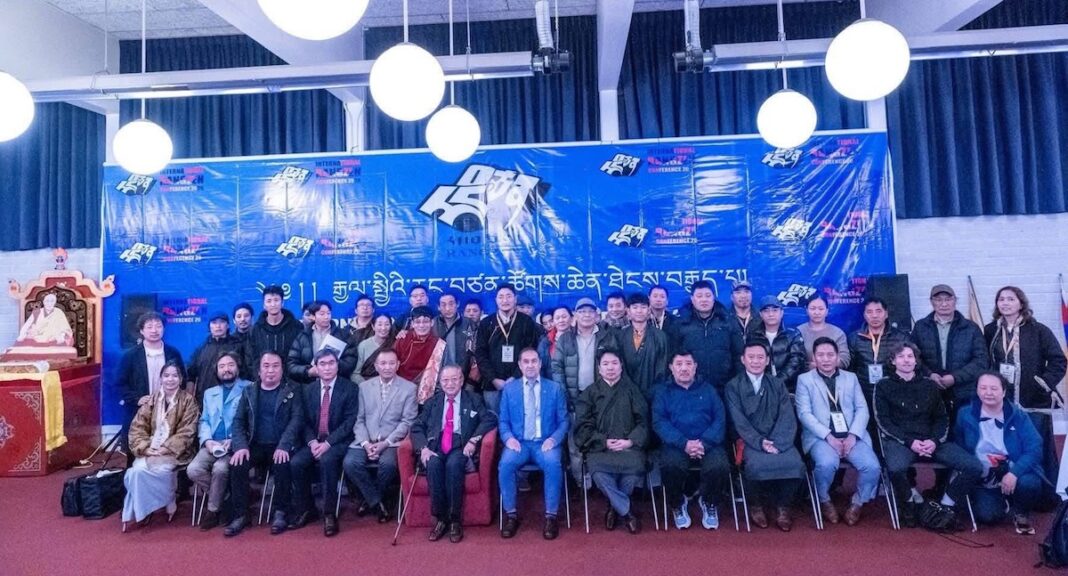
DHARAMSHALA, May 26: The 8th International Rangzen Conference, held from May 23 to 26 in the Blue Mountains near Sydney, Australia, concluded with the unanimous adoption of a four-point resolution calling for renewed global advocacy for Tibetan independence and urging the exile Tibetan government known officially as the Central Tibetan Administration (CTA) to withdraw the current official policy document, “Memorandum for Genuine Autonomy for All Tibetans,” and instead publicly adopt the goal of restoring Tibetan independence.
The four-day conference brought together more than 100 delegates from around 12 countries, including Tibetans, Westerners, Chinese, Taiwanese, Uyghurs, and Mongolians, in what organizers described as a broad cross-cultural platform committed to non-violent advocacy and international solidarity on the Tibet issue.
Among the chief guests were Australian MP Trish Doyle, Pema Gyalpo Gyari, Emeritus Professor at Gifu Women’s University and President of the Center for Indo-Pacific Studies in Japan, Blue Mountains Mayor Mark Greenhill, and Tibetan Youth Congress Vice President Tashi Targyal. Special guests included Tibetan poet and filmmaker Chenaktsang Dorje Tsering, Blue Mountains councillor Sarah Redshaw, Uyghur Freedom Forum founder and president Umit Hamit, and Burmese writer and PEN International Writers in Prison Committee Chair Ma Thida.
The conference opened with a declaration rejecting the legitimacy of the 1951 Seventeen-Point Agreement, stating that the Tibetan people had “never accepted” the accord signed under duress between Tibet and the People’s Republic of China (PRC).
Participants engaged in panel discussions, speeches, and presentations focusing on Tibetan independence, international advocacy, historical awareness, and strategies for strengthening the global Rangzen movement.
The most significant outcome of the conference was its third resolution, which directly called on the CTA and the Tibetan Parliament-in-Exile to withdraw the “Memorandum for Genuine Autonomy for All Tibetans,” commonly associated with the CTA’s official stance, “Middle Way Approach,” and instead publicly adopt the restoration of Tibetan independence as the official political stance.
The resolution argued that Beijing’s continued refusal to address Tibetan aspirations and the lack of trust in the Chinese government rendered dialogue under the current framework ineffective. Delegates maintained that decades of engagement had failed to yield meaningful progress and called for a clear political shift toward independence advocacy.
Another resolution emphasized the need to expose the Seventeen-Point Agreement as an “invalid and unlawful” document, accusing the Chinese government of failing to implement its provisions while overseeing widespread destruction of Tibetan religion, culture, language, and environment.
The conference’s resolution also stressed the importance of strengthening unity among Tibetans, acknowledging internal divisions as a contributing factor in Tibet’s historical loss of sovereignty.
The fourth and final resolution called for the “Draft Constitution of Tibet” to become a shared objective collectively pursued by all organizations within the Tibetan exile community, with delegates calling for extensive public consultations and discussions.
Alongside the resolutions, the conference issued a “Joint Diplomatic Appeal” addressed to the governments of the G7 nations, Australia, India, and other democratic countries to support a peaceful and negotiated resolution to the Tibet-China dispute. The appeal welcomed the United States’ 2024 passage of the “Promoting a Resolution to the Tibet-China Dispute Act” and urged other governments to adopt similar legislative and diplomatic measures recognizing Tibet as an “unresolved international issue and promoting dialogue without preconditions.”
The appeal also called for stronger international support for Tibetans’ right to self-determination, the preservation of Tibetan civilization, and the establishment of diplomatic mechanisms dedicated to the Tibet-China dispute, while asserting that Tibet had historically an independent country and that the CTA should be recognized as the legitimate government of Tibet.


The Tibetan independence Movement is growing thanks to the lacklustre success of the U-May Lam. Yet, the authorities in Dharamsala continue to suppress the Tibetan independence Movement in a desperate attempt to legitimise U-May Lam. The reason why the Tibetan independence’s Movement is growing is, first and foremost, TIBET WAS AN INDEPENDENT COUNTRY! IT IS AN INDISPUTABLE HISTORICAL FACT THAT CANNOT BE SCRUBBED OR ERASED NOT WITHSTANDING CHINESE DISINFORMATION AND DISTORTION! It is in the DNA of every Tibetan that WE ARE NOT CHINESE! This self-evident fact alone proves beyond a shadow of doubt that Tibetans have never ever identified themselves as Chinese! This feeling is rooted in the independence of Tibet. The independence movement has been battered and beaten by the exile authorities so much so that the recently held རང་བཙན་ Rangzen conference in the Blue Mountains in Australia had to go underground! Not a single public statement, no brochures nor press conference but only deafening silence! It was all hushed up as if it was illegal! What a sad development! Instead of coming out with pride and confidence, they were forced to crouch under the wilderness of blue mountains which is known for its natural serenity and retreat centres! There was however one exception though! Thubtan Chonyi, one of the most die hard independence advocate from California took the opportunity to demonstrate in-front of the Sydney Chinese consulate and in the protest speech he vouched to continue the Tibetan independence movement for generations by bringing his young son to let the Chinese communists know that even after his own life, his son will carry on the independence fight until Tibet gains its rightful independence! Nobody is disputing the power of the Chinese communists compared to our situation. But then the American revolution to fight for independence, the Indian freedom movement were fighting the great British empire which boasted that the sun never sets on it! During the 1970s of the hippie movement, the slogan was “Love makes the world go round”. Be that as it may but what really makes the world move is human determination and self-belief! Just like Shakespeare said, “cowards die many times before their deaths, the valiant never taste of death but once”, the cowards are tormented by fear. Our leadership has a very narrow outlook of the world and sees only the parading of Chinese soldiers in their propaganda drills and is overawed by their grandiose and showmanship. This kind of display is indeed to overawe the enemy to make them tremble with fear and that is exactly what has happened to our leadership which is caught by a fear psychosis. The reality is, the Chinese can lose power very quickly in an event of war over Taiwan which is more likely than not. No power is sustainable forever and all mighty empires have fallen and the Chinese communist evil empire is bound to fall!