

Tenzin Nyidon
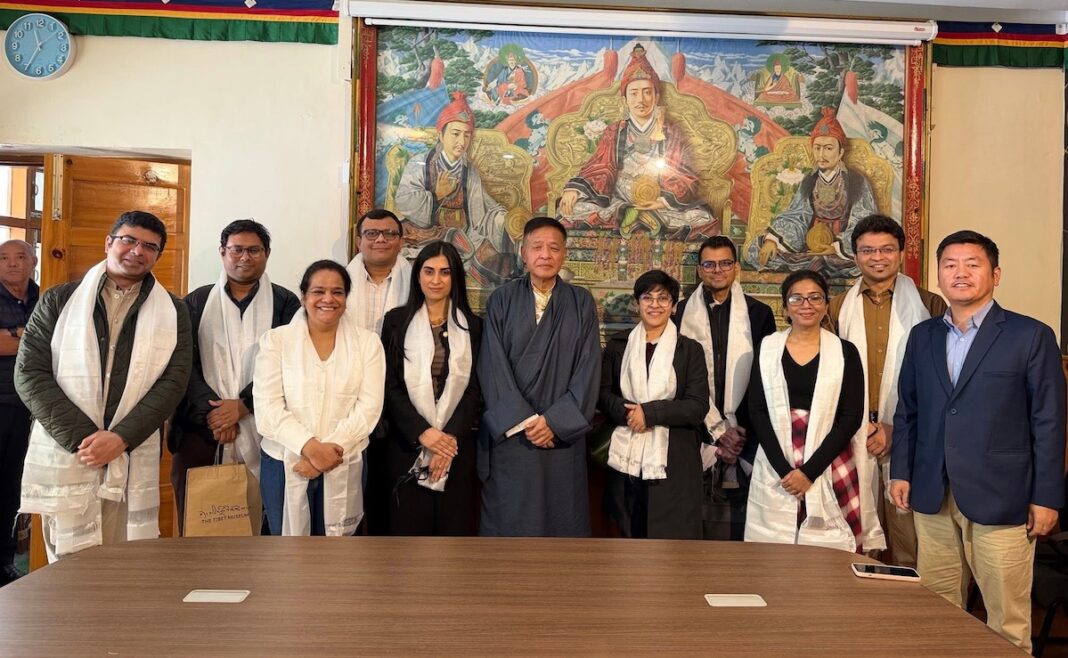
DHARAMSHALA, April 2: A delegation of Indian scholars, analysts, and policy researchers from nine prominent Indian institutions concluded a three-day orientation visit to Dharamshala, aimed at deepening engagement on Tibet within India’s strategic and policy discourse. The program, held from March 31 to April 2, was organized by the Tibet Action Institute (TAI) in partnership with the Asia Strategy Forum and Closed-Door Policy Consulting.
Bringing together experts working on China, Tibet, and the Indo-Pacific, the initiative sought to foster informed dialogue between Indian strategic thinkers and Tibetan policymakers, researchers, and activists. The delegation engaged extensively with senior leadership of the Central Tibetan Administration (CTA), including President Penpa Tsering and Speaker Khenpo Sonam Tenphel of the 17th Tibetan Parliament-in-Exile.
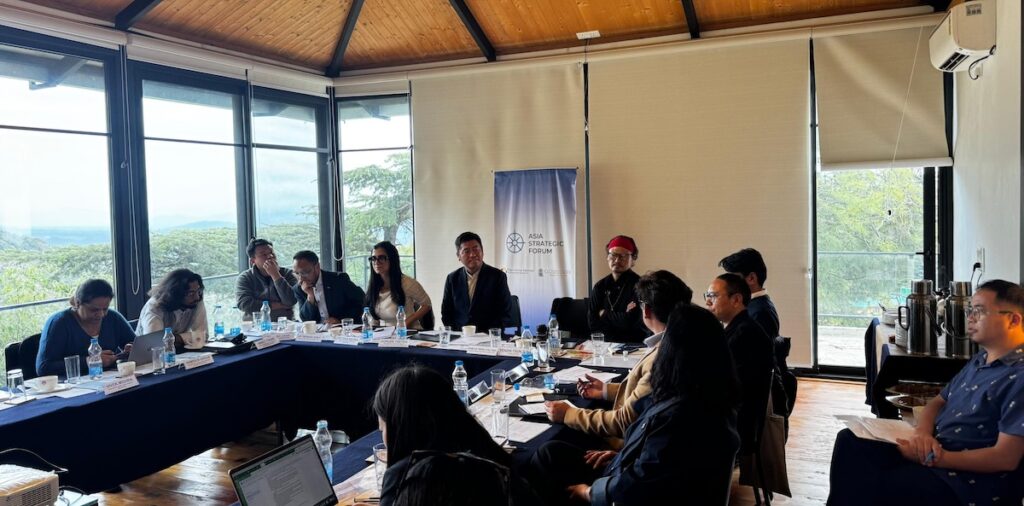
A key highlight of the visit was a closed-door roundtable discussion titled “India, Tibet and the Shifting World Order,” held at Chonor House on Wednesday. The session convened leading Indian strategic thinkers alongside Tibetan scholars and activists. Discussions centered on identifying areas of natural convergence between India’s national security interests and Tibetan aspirations, and how such alignment could translate into actionable policy frameworks. Participants also explored practical steps to enhance Tibet’s visibility within India’s strategic and policymaking circles, particularly in New Delhi.
Speaking to media representatives, Dorjee Tseten, Program Director at the TAI and Member of the 17th Tibetan Parliament-in-Exile, emphasized the importance of sustained engagement with Indian research institutions. He noted that over the past two years, Tibetan organizations have expanded their outreach to think tanks in Delhi, facilitating discussions on a broad spectrum of issues, including Tibet’s political situation, environmental concerns, China’s military buildup in Tibet, human rights conditions inside Tibet, and the sensitive issue of the reincarnation of His Holiness the Dalai Lama. The current program, he said, marked a significant step toward consolidating these engagements and building long-term strategic partnerships.
“These discussions have been deeply meaningful,” Tseten said, adding that while Indian stakeholders naturally prioritize national interests, there is growing recognition of the strategic relevance of the Tibet issue for India. He stressed the need to align the Tibetan cause with India’s broader geopolitical priorities and to expand such dialogues within Delhi to inform future policy directions.
Namrata Hasija, Research Fellow at the Centre for China Analysis and Strategy (CCAS), told media personnel that the interactions with Tibetan leadership and institutions provided valuable insights into both the Tibetan cause and avenues for collaboration. She stated that Tibet is poised to play a critical role in shaping the trajectory of India–China relations. While recent developments may suggest a thaw in bilateral ties, she cautioned that such shifts are likely tactical and temporary. Pointing to China’s continued military buildup in the Western Theater Command and the Tibet Military District, she argued that underlying tensions remain unresolved.
Hasija further emphasized that the Tibet issue could emerge as a key pressure point in India–China relations, with implications spanning economic, diplomatic, and military domains. She called on India’s strategic community to prepare for future scenarios, including developments surrounding the succession of the Dalai Lama. Highlighting her institution’s work, she noted that CCAS has consistently produced research on Tibet and China, including regular reports on developments inside Tibet and the Tibetan diaspora. These analyses, she added, are shared with relevant stakeholders within the Indian policy ecosystem.
Kamal Madishetty, Assistant Professor at Rishihood University and Visiting Fellow at India Foundation, emphasised the importance of the exchange in broadening the understanding of Tibet-related issues. He pointed to environmental degradation on the Tibetan Plateau, driven by dam construction, mining, and militarization, as a matter of global concern. Given that Tibet is the source of major Asian river systems, such as the Brahmaputra and Indus, ecological changes in the region have far-reaching implications that extend beyond Tibet and India.
Madishetty also highlighted concerns over recent legislative developments in China, including the “Law on Promoting Ethnic Unity and Progress.” He warned that such measures risk eroding Tibetan cultural identity while providing legal justification for existing policies. While noting that think tanks may not typically issue joint statements, he stressed the importance of rigorous research and informed analysis in shaping discourse. He expressed confidence that the discussions would lead to increased scholarship, awareness, and policy engagement on Tibet within India.
Participants in the program broadly expressed optimism that such engagements would contribute to a more nuanced and robust India policy on Tibet, while also amplifying the Tibetan issue within India’s strategic community.
As Tibetan MP Dorjee Tseten noted, the initiative represents not just a learning opportunity but a foundation for future cooperation—one that seeks to bridge perspectives, align interests, and navigate the complexities of a rapidly evolving geopolitical landscape.

