

Tenzin Nyidon
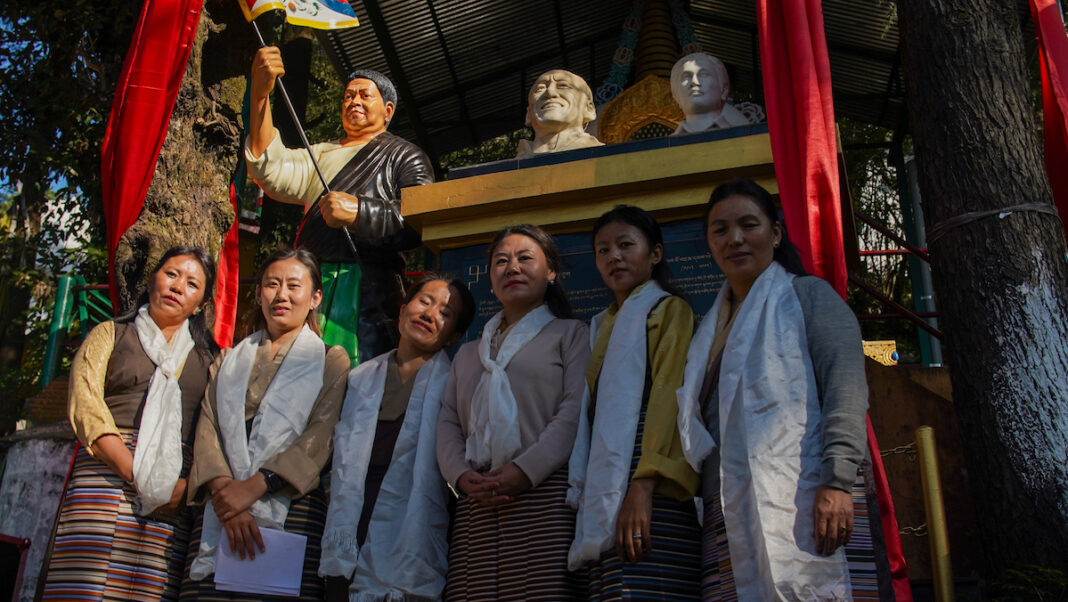
DHARAMSHALA, Oct. 26: The Dharamshala Regional Tibetan Women’s Association (RTWA) on Monday inaugurated a 6.5-foot statue of the late Tibetan independence activist Lobga Rangzen at Lhagyal Ri, alongside memorials to fellow Tibetan martyrs Thupten Ngodup and Jamphel Yeshi. The statue honoured the late martyr’s ultimate sacrifice, following his self-immolation in front of the United Nations headquarters in New York on July 2, 2026.
Tenzin Kunsel, former president of the Dharamshala RTWA, said the decision to erect a statue in memory of Lobga Rangzen was made collectively by the association’s executive committee after reflecting on his self-immolation. “After he made the ultimate sacrifice, we reflected on what we, as an association, could do for the Tibetan people. We felt that if someone could make such a sacrifice for the Tibetan cause, we should also do something meaningful in his memory,” Kunsel said.
She said the association had faced considerable difficulties in finding a suitable location for the statue. The executive committee had approached several places it considered more suitable, but its requests were not approved. The statue was eventually erected at the site provided by the Gaden Phodrang, allowing the project to move forward.
Kunsel also described the financial challenges the association encountered. During the tenure of the 12th executive committee, members had planned to collect public donations to fund the project. However, after the association became embroiled in an internal dispute following the Central Tibetan Women’s Association’s press statement welcoming Chinese leader Xi Jinping, efforts to resolve the disagreement did not yield a response. The Dharamshala association eventually felt compelled to suspend its activities and return its traditional chubas, she said.
“Under those circumstances, we could no longer go out to collect donations in the name of the Tibetan Women’s Association, so we tried to find a way forward on our own,” Kunsel said. She added that after the association announced its decision to suspend activities, donations began arriving from Tibetans and supporters in various countries, helping the project progress.
Kunsel also outlined the financial challenges involved in completing the project. The statue alone cost approximately ₹3.01 lakh, while labour expenses amounted to around ₹40,000. She said the costs of the consecration ceremony and other miscellaneous expenses had yet to be finalised, and the association was still calculating the total expenditure.
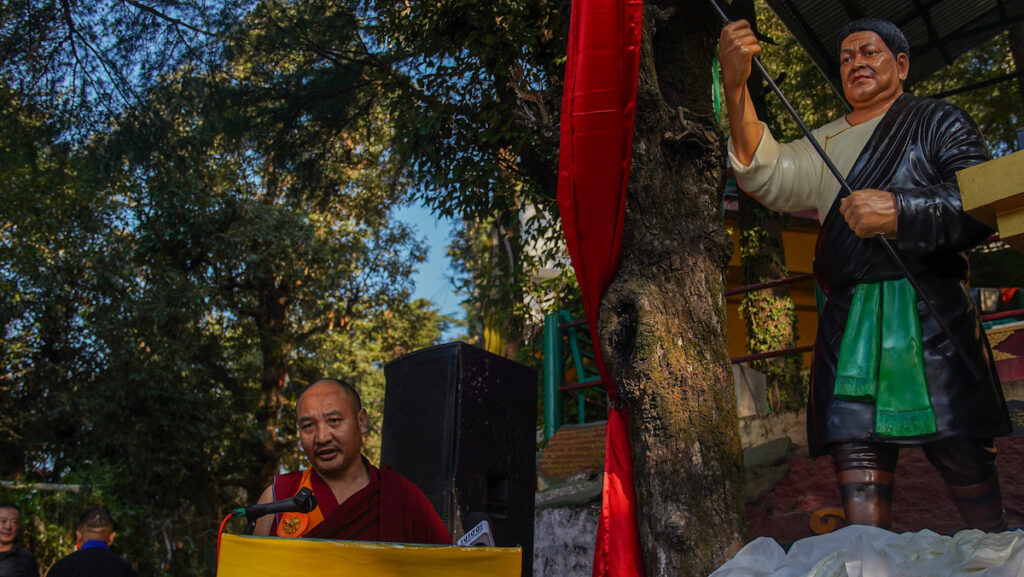
Speaking as the chief guest at the inauguration, Parliamentarian Lopon Thupten Gyaltsen commended the RTWA for undertaking the initiative despite the challenges it may have faced, describing the memorial as a timely effort to preserve the memory of Tibetan patriots and introduce their sacrifices to the wider public.
He noted that Tibetans constitute a relatively small community living within India’s much larger society, making it important to share the stories of those who have sacrificed their lives for Tibet’s freedom and national identity. By introducing these figures to other communities, he said, Tibetans could demonstrate their commitment to preserving their homeland, culture, language and national identity, while helping others understand the aspirations underlying the Tibetan struggle.
He said the inauguration was particularly significant given that Tibet had yet to regain its freedom and independence after more than six decades of Chinese rule. He referred to the sacrifices of Tibetan patriots, including those who had resorted to self-immolation in protest against Chinese policies, saying their actions placed a responsibility on the wider Tibetan community to consider what more it could do for the cause.
Rather than focusing solely on counting the number of patriots who had sacrificed their lives or the memorials erected in their honour, he urged Tibetans to reflect on the meaning of those sacrifices and their own responsibilities. “Each and every one of us must reflect deeply on the sacrifices these patriots have made and consider what we, as individuals, can do in return,” he said.
He stressed that the responsibility for advancing the Tibetan cause extended across the community, regardless of age, social standing or institutional position. Government representatives, organisational leaders, ordinary Tibetans, monks and nuns all have a role to play, he said. He described the present period as a critical time for the Tibetan community, emphasising the need for collective commitment and sustained efforts towards their shared aspirations.
Concluding his remarks, he expressed gratitude to the Dharamshala RTWA for creating the memorial, reiterating that it should serve not only as a place of remembrance for Tibetans but also as a means of raising awareness of their history and struggle among the wider public.

