

Tenzin Nyidon
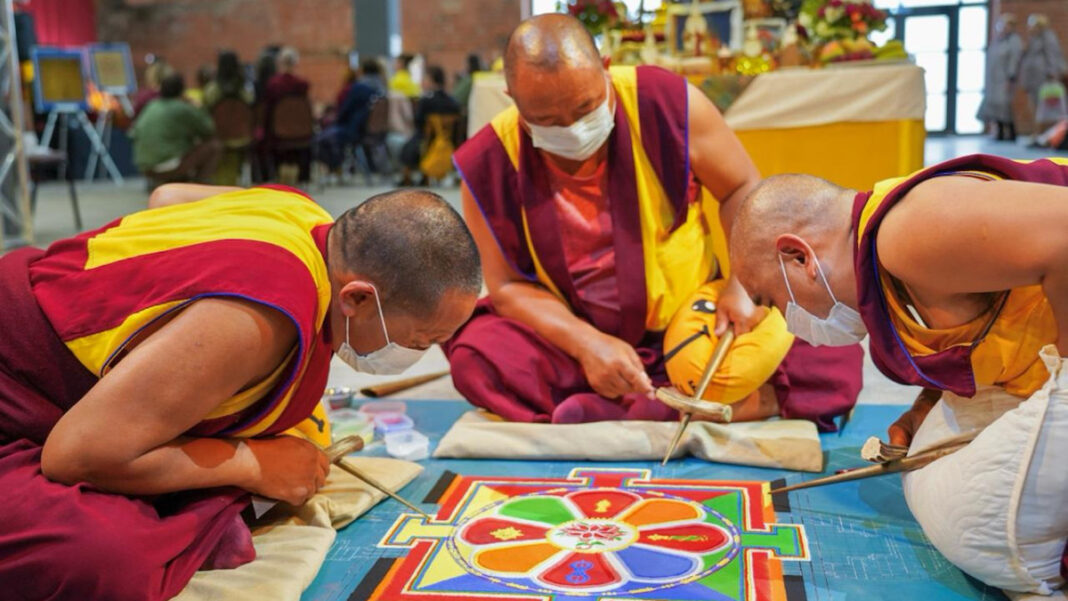
DHARAMSHALA, April 21: Russian authorities have deported a group of Tibetan Buddhist monks of Gyudmed Tantric Monastery, in Hunsur Tibetan Settlement, Karnataka, following a police raid on a Buddhist festival in Moscow. The move has drawn criticism from organisers and raised fresh concerns over increasing restrictions on religious activities in Russia.
According to reports, Moscow police carried out a raid on April 6 at the “Buddhist Festival of Good Fortune,” held at the Rassvet cultural hub in the city centre, detaining several monks who were scheduled to participate in the event. A morning livestream on VKontakte was abruptly cut off about an hour after it began. The festival, originally planned to run from April 4 to 15, was later cancelled in the wake of the authorities’ intervention.
The event was organised by the Nalanda Foundation, which announced that it would not proceed in the absence of its main participants—the monks of Gyudmed Tantric Monastery. “We think it would be inappropriate to continue the festival in the absence of its main participants,” the foundation said in a statement posted on VKontakte.
The monks, who had travelled from India to lead group prayers and create traditional sand mandalas, were deported on April 8 after being accused by Russian authorities of conducting “unauthorised missionary work.” Law enforcement officials claimed the monks had failed to obtain a special license required to hold religious events at a secular venue.
However, festival organisers contested the allegations, stating that the monks had entered Russia on valid religious visas and that all documentation “was processed in compliance with all required procedures.” They emphasised that the monks’ activities were limited to ritual practices and cultural demonstrations, with no element of proselytisation.
The incident has triggered backlash among members of Russia’s Buddhist community and beyond. Social media users criticised the authorities’ actions as excessive, with one user, Dina Kozhukhova, writing that “offending Buddhists, especially on such a flimsy pretext, is a measure of last resort.”
The development has been felt particularly strongly in Kalmykia, a Buddhist-majority region where Tibetan Buddhist traditions form a core part of cultural and religious identity. Observers noted that the deportation of the monks has resonated deeply among local communities with historical ties to Tibetan religious institutions.
Some reports suggested alternative explanations for the festival’s shutdown, including the organisers’ decision to sell a book by Telo Tulku Rinpoche, the former Supreme Lama of Kalmykia. Rinpoche was designated a “foreign agent” in 2023 after criticising Russia’s invasion of Ukraine, a move that forced his resignation and departure from the country.
Analysts say the incident reflects a longstanding policy by Russian authorities to limit connections between domestic Buddhist communities and foreign religious centres, particularly those linked to Tibet and Mongolia. Despite this, regions like Kalmykia have historically maintained a degree of autonomy in religious affairs, often relying on visiting Tibetan monks for teachings and rituals.
The deportation has also revived memories of past religious repression. During the Soviet era, Buddhist institutions in regions like Kalmykia were systematically dismantled, with temples destroyed and religious practice curtailed. The revival of Buddhism in the post-Soviet period has relied significantly on support from Tibetan monastic institutions in India.

