

Tenzin Nyidon
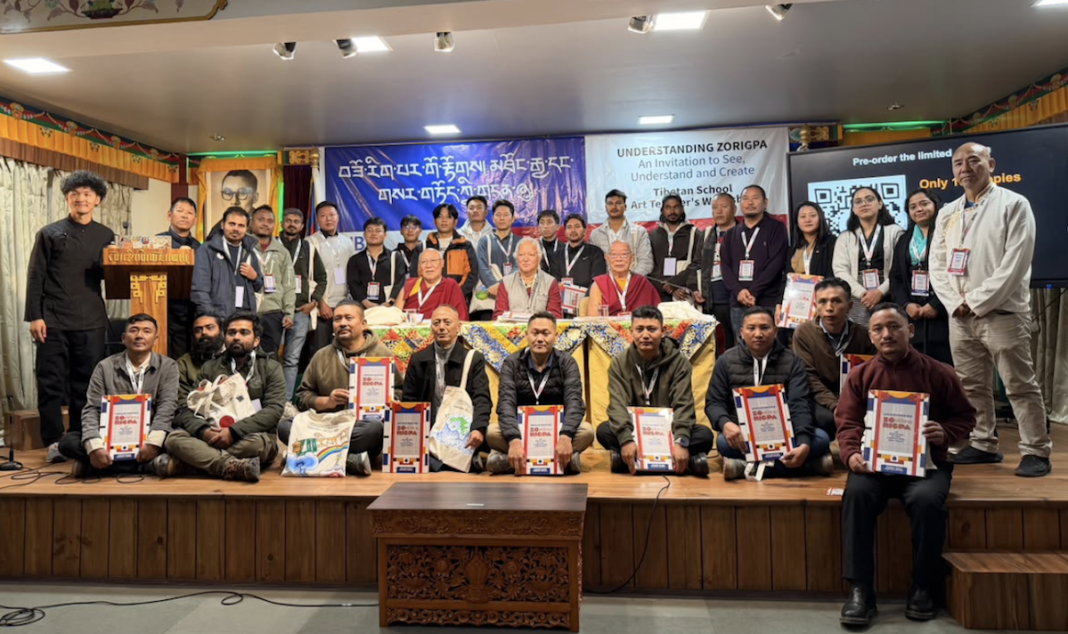
DHARAMSHALA, Nov. 23: A new curriculum textbook on traditional Tibetan arts and craftsmanship, titled “Understanding Zo-Rigpa: An Invitation to See, Understand, and Create,” was launched at the Library of Tibetan Works and Archives (LTWA) Hall on Monday.
The textbook was developed by Jamyang Tenzin and Ngawang Tsering, members of the Whiteline Graphics team, with the aim of bringing traditional Tibetan arts and crafts into classrooms through a structured curriculum that combines cultural heritage with contemporary creative practices.
Speaking at the launch, Jamyang said the initiative centres on Zo-Rigpa, the traditional Tibetan system of arts and craftsmanship, recognised as one of the Ten Sciences of Tibetan knowledge. He expressed hope that the curriculum would help integrate traditional artistic practices with contemporary creative approaches in classrooms, encouraging students to explore artistic expression rooted in their own cultural heritage.
The textbook features 130 artworks by 55 Tibetan artists, including 17 artists from inside Tibet. Alongside the launch, a week-long training programme running from November 22 to 28 is being organised for more than 30 art teachers from Tibetan schools. The programme focuses on integrating traditional and contemporary art practices, with sessions covering Tibetan calligraphy, thangka painting, architectural design and visual storytelling.
Speaking to media representatives after the launch, Jamyang highlighted the limited attention given to art education in Tibetan schools. Although art classes are included in school curricula, he said, they receive considerably fewer periods than other subjects and lack adequate institutional and societal support.
Jamyang and Ngawang Tsering called for a shift in how both the Central Tibetan Administration (CTA) and the wider Tibetan public perceive arts and cultural education. They urged relevant institutions to adapt to changing times and strengthen their support for the development and preservation of traditional Tibetan arts and craftsmanship.
Guest speaker Geshe Lhakdor, Director of the LTWA, warned that the rapid advancement of artificial intelligence poses a growing threat to the preservation of ancient cultural traditions and practices. He stressed the importance of adapting traditional arts to contemporary developments while ensuring their continued relevance. He also called for greater efforts to promote traditional craftsmanship through production and commercialisation, enabling artists and artisans to achieve economic self-reliance and sustainability.
Australia-based Tibetan artist Karma Phuntsok, fellow guest speaker, spoke about his commitment to practising painting rooted in Buddhist scriptures despite living abroad. He said he takes pride in continuing these artistic traditions as a means of preserving his Tibetan identity and cultural heritage.
Namsa Chenmo, the official tailor of His Holiness the Dalai Lama, expressed concern over the declining interest in traditional Tibetan arts and crafts, particularly among younger generations. She warned that these cultural traditions risk disappearing if fewer young Tibetans take an interest in learning and carrying them forward.

