

Tenzin Nyidon
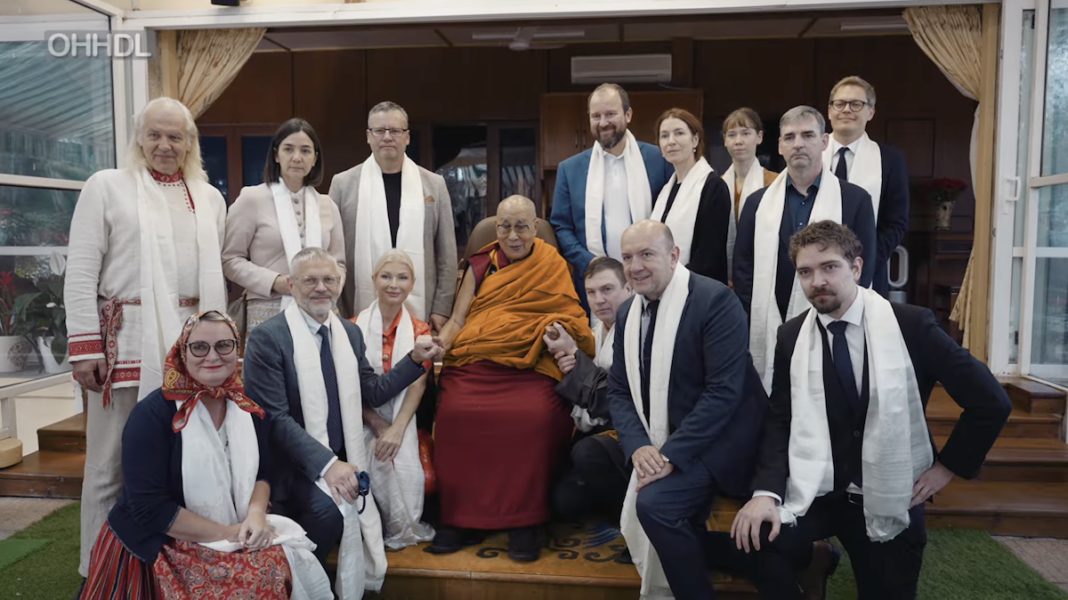
DHARAMSHALA, Nov. 5: An Estonian delegation comprising four members of parliament on Thursday met with His Holiness the 14th Dalai Lama at his residence in Dharamshala, drawing parallels between Estonia’s experience of Soviet occupation and Tibet’s struggle for freedom. The delegation encouraged Tibetans not to lose hope in their aspirations to “go home” and “restore your country’s statehood”.
The parliamentary delegation included MP Toomas Uibo, MP Grigore-Kalev Stoicescu, MP Tiit Maran and MP Kadri Tali, alongside representatives from various fields, including diplomacy, business, investment, cultural heritage, environmental conservation, research, and the arts.
Speaking to media representatives after the audience, MP Kadri Tali recalled Estonia’s restoration of independence in 1991, when she was 19, describing the experience as a defining moment for the country and its people. She said Estonians felt a deep connection with Tibetans because of their shared appreciation of the importance of preserving their culture, language, and independence. Tali described the opportunity to meet the Tibetan spiritual leader as a unique and deeply meaningful experience.
MP Grigore-Kalev Stoicescu, meanwhile, urged Tibetans to remain hopeful, drawing on Estonia’s own history of occupation and eventual restoration of statehood. “Our people, our country were also occupied for decades, and we didn’t lose hope,” he said, recalling how a turn in historical circumstances eventually enabled Estonia to reclaim its independence and statehood.
Expressing solidarity with Tibetans, Stoicescu said he hoped that a similar opportunity would one day emerge for Tibet, allowing Tibetans to return to their homeland and restore their country’s statehood.
He also shared a personal connection to Tibet, recounting how he first developed an interest in the country after purchasing a French-language first edition of Seven Years in Tibet in Paris many years ago. The book, followed by the film adaptation, deepened his appreciation of Tibetan people, culture and their cause, which he said had also gained considerable recognition in Estonia and other countries.
MP Tiit Maran emphasised the importance of preserving cultural identity, roots and collective values, particularly during periods of political uncertainty and adversity. Drawing on the metaphor of a candle illuminating the darkest surroundings, Maran said that a people’s culture, ideas and roots serve as an enduring source of light and strength, helping them remain prepared for opportunities when circumstances change.
He also identified a shared connection between Estonians and Tibetans in their relationship with nature and the natural world. Explaining his admiration for His Holiness the Dalai Lama, Maran described the Tibetan spiritual leader as a guiding light for his people, praising his lifelong efforts to help Tibetans realise their aspiration to live in a free country.
Other members of the Estonian delegation included Evar Riitsaar, Mare Mätas, Monika Wessels, Riivo Anton, Allan Kaldoja, Piret Simson, Rando Künnapuu, Mati Kose, Annabel Piiritalu and Roy Strider.

