

Tenzin Nyidon
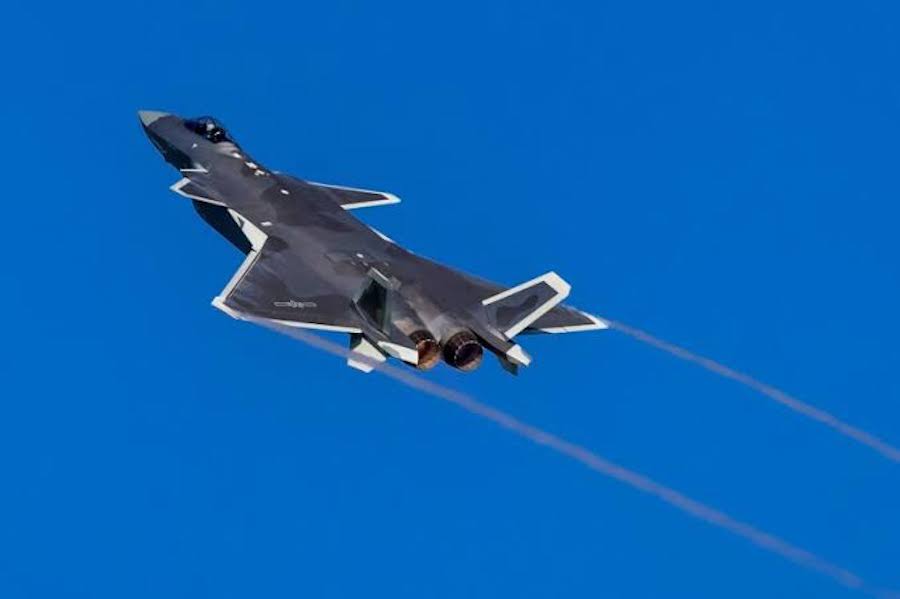
DHARAMSHALA, Nov. 16: A Chinese military aircraft reportedly entered Indian airspace over Sikkim on November 12 and remained in the area for approximately 20–25 minutes despite repeated warnings from the Indian Air Force (IAF), according to multiple Indian media reports.
The aircraft was reportedly detected by the IAF at around 8 am at an altitude of approximately 25,000 feet. Indian Air Force personnel reportedly issued repeated radio warnings directing the aircraft to return to Chinese territory. However, it allegedly continued operating over the area for another 20–25 minutes, according to Outlook India, which first reported the incident on November 14.
The type of aircraft involved, its precise flight path, the extent of its alleged entry into Indian airspace and the circumstances surrounding its eventual departure remain unclear. The report said it had approached the Indian Air Force for comment and was awaiting a response.
As of November 16, neither the Indian Air Force nor the Ministry of Defence had issued a public statement confirming the alleged airspace violation. There has also been no publicly reported confirmation that the Indian government has formally taken up the incident with Beijing or lodged a diplomatic protest.
The Congress party, however, criticised the government over the reported intrusion and called for a strong protest against China. In a social media statement, the opposition party questioned the government’s response, asking when Prime Minister Narendra Modi would show a firm stance towards Beijing. It also said it hoped the government would not give China a “clean chit” over the incident.
The reported aircraft movement is particularly significant given the strategic location of Sikkim, which lies close to the Doklam plateau, where Indian and Chinese troops were engaged in a prolonged military standoff in 2017.
The region also overlooks the strategically vital Siliguri Corridor in West Bengal, popularly known as the ‘Chicken’s Neck’, a narrow stretch of Indian territory connecting the country’s northeastern states with the rest of the mainland. The corridor measures approximately 20–22 kilometres at its narrowest point and is considered critical to India’s military, transport and logistical connectivity with the Northeast.
India and China have existing bilateral agreements governing military aircraft movements along their disputed border. Under the 1996 Agreement on Confidence-Building Measures in the Military Field Along the Line of Actual Control (LAC), both countries are required to take measures to prevent air intrusions. The agreement also stipulates that military aircraft cannot cross the LAC or enter the other country’s airspace without prior permission.
It further provides that any air intrusion should cease once detected and that the country operating the aircraft should investigate the incident and communicate its findings through diplomatic channels or border personnel meetings. India has previously raised alleged airspace violations and military aircraft movements with China through established mechanisms, including flag meetings, border personnel meetings and diplomatic channels.
However, according to reports there has been no publicly available information establishing whether these mechanisms have been invoked over the reported November 12 incident.

