

Tenzin Nyidon
DHARAMSHALA, Sept. 25: The Central Tibetan Administration (CTA) on Friday rejected climate activist Sonam Wangchuk’s comparison between the situation in Ladakh and conditions inside Tibet, saying the comparison was “misplaced and inaccurate” and did not reflect the reality faced by Tibetans under China’s colonial rule.
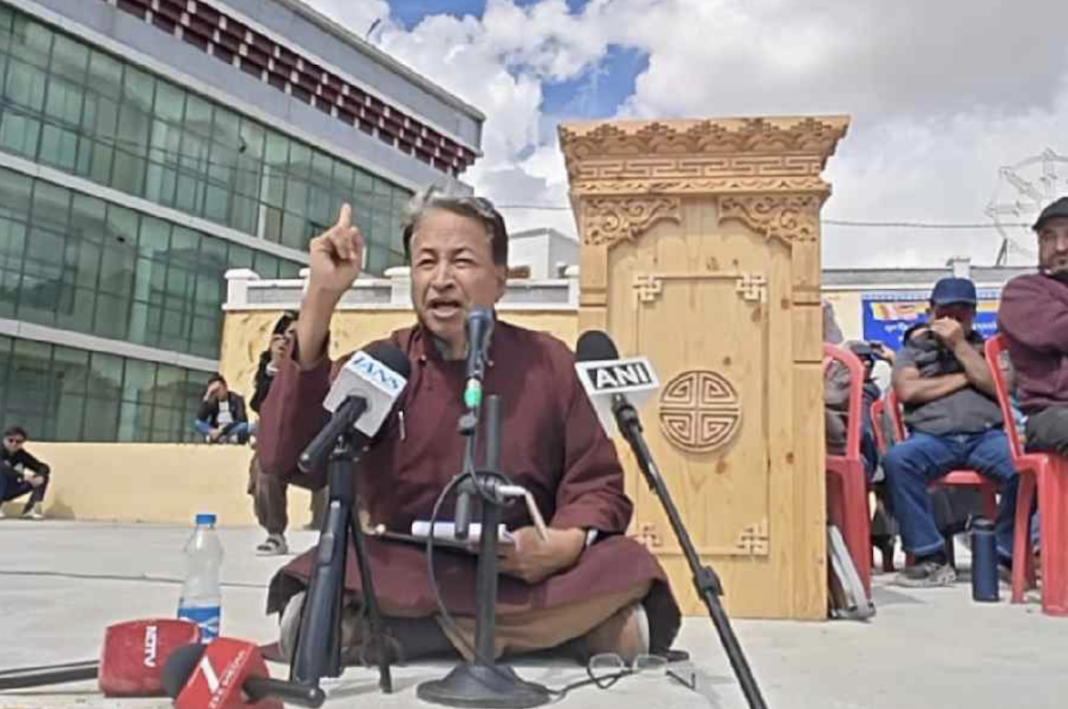
Wangchuk made the remarks on Thursday at NDS Ground in Leh while addressing a gathering marking the first anniversary of the September 24, 2025 violence in Ladakh, in which four protesters were killed in police firing. He said Ladakh had chosen to remain with India because of its democratic system and the expectation of living with dignity, but argued that the situation had since deteriorated.
“Today, such oppression is being inflicted on Ladakh that, in my view, even China is not doing this to Tibet,” Wangchuk said.
The CTA spokesperson, Tenzin Lekshay, in a statement issued Friday, pushed back against the comparison, highlighting what it described as the continuing repression of Tibetans under China’s colonial rule. “The Central Tibetan Administration expresses deep concern over remarks made by Sonam Wangchuk in his recent public speech in Ladakh, in which he compared the situation in Ladakh with that of inside Tibet,” the statement said.
The CTA described the comparison as “misplaced and inaccurate,” adding that Wangchuk’s remarks “don’t reflect the real situation inside Tibet.” “Tibet continues to remain under China’s authoritarian rule, where Tibetans face systematic repression of their fundamental rights, religious freedom; and intensification of measures aimed at erasing its distinct cultural identity,” the statement said.
The CTA’s statement was followed by criticism from Tibetan voices living and working in Ladakh, who argued that the suffering of Ladakhis and Tibetans should not be placed in a hierarchy or used to diminish either community’s experience.
Tsering Wangmo, a Tibetan filmmaker based in Ladakh, acknowledged her personal connection to the region while challenging Wangchuk’s characterization of the situation in Tibet. “I was born and raised in Ladakh. Ladakh means a great deal to me. I love Ladakh and I care deeply for it,” Wangmo said, adding that she supports “Ladakh and its people’s wishes for political stability and self-determination.”
She then contrasted her experience in Ladakh with her connection to Tibet, saying she lives in Ladakh as a stateless person because her homeland remains under Chinese control. “My grandparents, my father, and other members of my family passed away in exile without ever having the right to return to their homeland,” she said.
She further pointed to restrictions faced by Tibetan artists, writers and singers, saying they have been imprisoned or silenced because of political expression. “Forget about any right to outright express our desires for freedom. The situation in Tibet is incomparable to any other,” she said. “Just as every form of oppression is unique and can never be compared with another.”
Calling for solidarity rather than competition between communities facing hardship, Wangmo said: “Only through solidarity can we speak of shared experiences and find points of alignment, but we should never turn suffering into a competition over who has suffered more.” Addressing Wangchuk directly, she added: “I respect you. I never expected someone of your stature to make a remark like this.”
Ladakhi singer Tenzin Shayan, who is based in Zanskar, Ladakh, similarly expressed support for Wangchuk’s broader advocacy for Ladakh while condemning his characterization of Tibet. “I totally agree with and respect what Ka Sonam Wangchuk said today at NDS Ground, and I sincerely thank him for standing up selflessly for the people and future of Ladakh,” Shayan said.
However, he objected to the suggestion that Tibetans do not suffer significantly under Chinese rule, pointing to the imprisonment of Tibetans, self-immolations and restrictions on religious and cultural expression.
Shayan also referred to restrictions surrounding images of the Dalai Lama and concerns over Tibetan language, culture and traditions under Chinese policies. “His Holiness had to leave his country behind with millions of Tibetans becoming refugees today separated from their loved ones for ages,” he said.
While expressing hope that “the dreams and aspirations of Ladakh are achieved,” Shayan stressed that Ladakh’s struggle should not come at the expense of acknowledging the Tibetan experience. “Achieving our own aspirations should never require us to minimise or dismiss the suffering of another people,” he said. “I say this with respect, but also with the responsibility of speaking for the truth and dignity.”


It is really true as the condition of Ladakhi under Indian govt. far better in every way.You have voting right, fundamental rights,free movement,freedom of religion and lots more.In Tibet all these are restricted and it is better to go deeper into the suffering of Tibetan worse than Jews under Nazi’s.I understand Sonam Wangchuk wants to show the condition of Ladakhi are far worst than Tibetan under China.I think the comparison is indigestible.Nut I have full respect for Wangchuk crusader from a young age.