
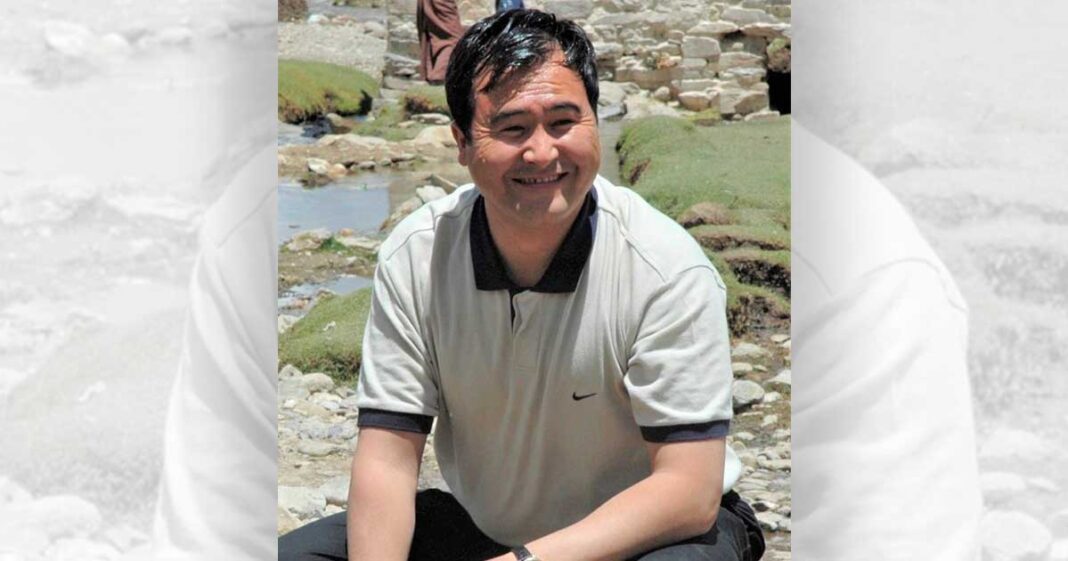

Tenzin Nyidon
DHARAMSHALA, Aug. 21: Chinese authorities are continuing to suppress online advocacy and restrict prison visits concerning Tibetan businessman and philanthropist Dorjee Tashi, who has been imprisoned since 2008 and is serving a life sentence in Lhasa’s Drapchi Prison, according to a report by the Washington-based advocacy group International Campaign for Tibet (ICT).
The report stated that an August 12, 2026-dated post circulated on Chinese social media, lawyers representing Dorjee Tashi have repeatedly been denied permission to visit him, including requests submitted in July and August. The latest restrictions have intensified concerns among his family, lawyers, and supporters over the authorities’ continued refusal to allow basic contact with the imprisoned businessman.
The suppression has extended beyond prison visitation to Chinese social media, where authorities have repeatedly removed posts advocating for Dorjee Tashi’s rights and challenging his imprisonment. A post published on August 1 described his life sentence as a “profound miscarriage of justice” and called for renewed legal scrutiny of his case. After the post was removed, it was reposted on WeChat on August 12, but was again taken down shortly afterward. ICT archived the reposted page before its removal; the original link now displays a notice stating that the content cannot be viewed because, following complaints, it violated China’s Cybersecurity Law.
The repeated deletion of posts has effectively narrowed the space for Chinese rights advocates, lawyers, family members, and other supporters to publicly discuss Dorjee Tashi’s case. According to the August 12 post, authorities have also sought to pressure those advocating for him to remove online material and apologize before prison visits would be considered. Supporters have condemned the practice as an attempt to make access to a prisoner conditional on silence, turning a basic visitation right into a bargaining tool and deterring further public advocacy.
The restrictions on prison visits have persisted for years. Dorjee Tashi’s elder brother and eldest sister, Gonpo Kyi, have not seen him since their last visits in 2019, while his second sister last saw him in 2021. His wife and children have reportedly been denied visits for approximately two years, since 2024. The family says prison authorities began imposing tighter restrictions on visits in 2019, despite earlier allowing family members to see him and without providing a clear legal justification for the subsequent limitations.
Dorjee Tashi’s defense lawyers have also faced repeated obstacles. Lawyers Liu Zheng and Wang Fei have submitted formal requests to meet him but, according to supporters, have encountered delays, refusals, additional conditions and what they describe as retaliatory measures linked to their efforts to challenge his imprisonment. Wang Fei was reportedly denied a visit after informing Dorjee Tashi’s family that he had said he was beaten in prison during their previous meeting in October 2025.
Dorjee Tashi was arrested in 2008 amid widespread protests in Tibet and was initially accused of “funding activities that endanger national security.” He is now serving a life sentence for alleged “loan fraud,” a conviction that his supporters and legal advocates have long challenged. His case is marked by longstanding allegations of serious due-process violations. His family and lawyers have repeatedly sought a retrial over more than a decade, but authorities have refused to reopen the case.
After nearly 18 years in prison, Dorjee Tashi’s supporters are again calling for a full retrial and the restoration of regular visitation rights for his family and lawyers. They are also urging prison officials, prosecutors and disciplinary authorities to investigate the repeated denial of visits and hold those responsible accountable. The latest removal of online advocacy, following years of restrictions on family and legal access, has deepened concerns that Chinese authorities are seeking not only to maintain Dorjee Tashi’s imprisonment but also to silence public discussion of his case and prevent continued challenges to the legality and fairness of his detention.

