

Tenzin Nyidon
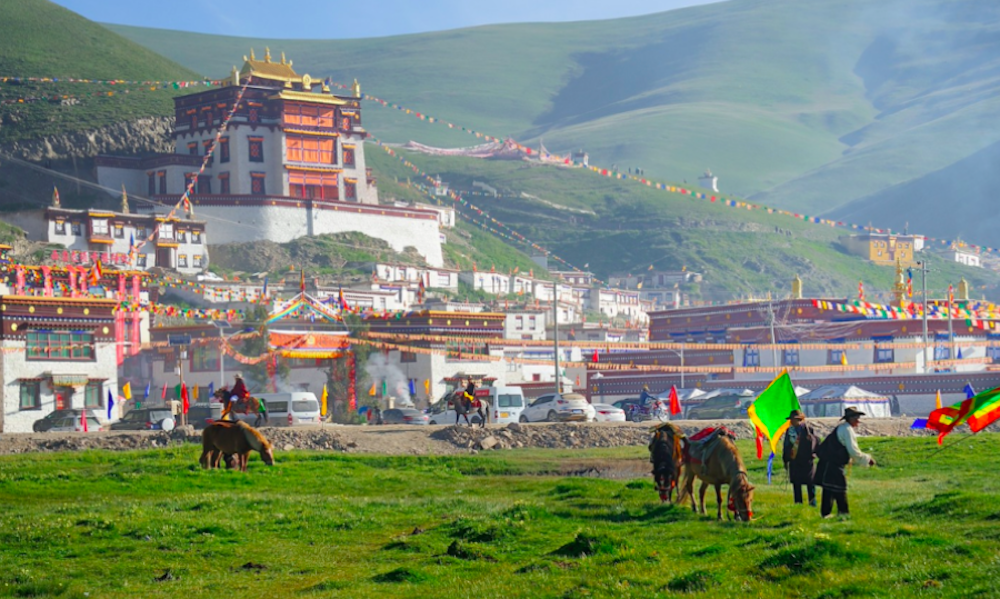
DHARAMSHALA, Oct. 27: Chinese authorities may have launched, or be preparing to carry out, a large-scale demolition drive targeting more than 200 residential homes belonging to monks at the historic Dza Sershul Monastery in Sershul County, Karze region of Kham, eastern Tibet, according to a report by tibet.net, the official portal of the Central Tibetan Administration (CTA), also known as the Tibetan government in exile.
The reported demolition operation is believed to have begun on October 25 or 26, although neither the precise date nor the full extent of the operation has been independently verified.
According to the report, Chinese authorities have been convening public meetings in the locality while imposing restrictions on internet access and the flow of information. These constraints have severely impeded efforts to independently establish the scale of the reported demolitions and assess the situation at the monastery.
Founded in 1760, Dza Sershul Monastery is regarded as the largest Gelug school Buddhist institution in the Dzachuka region of Sershul County, Karze, eastern Tibet. It serves as a major centre of Buddhist scholarship and spiritual practice for surrounding nomadic communities.
The monastery comprises six colleges specialising in Sutra and Tantra studies and is renowned for its rigorous philosophical curriculum and authority to confer the Geshe degree, one of the highest scholarly qualifications in Tibetan Buddhism. Its monastic population was reported to be approximately 500 in 2012, while more recent estimates place the number of monks at more than 1,200.
Sometimes described as a “museum” of Tibetan Buddhism, the monastery safeguards sacred relics and religious artefacts, including a relic attributed to Tsongkhapa, the founder of the Gelug tradition. Its religious heritage is associated with the scholarly lineage of Nalanda University in India, which exerted a profound influence on Tibetan Buddhist philosophy and monastic education.
Among its most prominent treasures is a 19-metre-tall gilded copper statue of Maitreya Buddha, known in Tibetan as Jampa and revered as the Future Buddha. The statue is reputed to be the second-largest of its kind in the Tibetan regions, after the Maitreya statue at Tashilhunpo Monastery in Shigatse.
Beyond its religious and educational functions, Dza Sershul Monastery also operates a Tibetan medical hospital and an elderly care home, extending its services to the wider local community.
Its role has also extended to humanitarian relief. Following the devastating Yushu earthquake in 2010, more than 900 monks reportedly participated in rescue and relief efforts, underscoring the monastery’s importance not only as a centre of religious learning but also as a source of community support and assistance during emergencies.
The reported threat to more than 200 monks’ residences therefore raises concerns that extend beyond the loss of housing. If the demolitions proceed as reported, they could disrupt the lives of a substantial number of monks at an institution that has served as a major centre of Buddhist learning, religious practice and community welfare for more than two and a half centuries.

