

Tenzin Nyidon
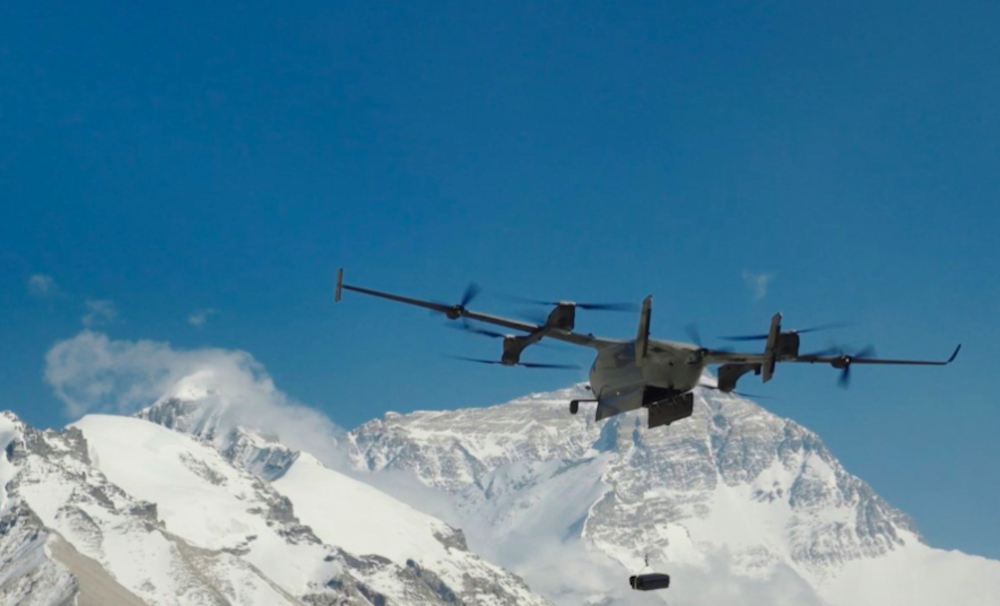
DHARAMSHALA, Oct. 1: China has built an extensive drone surveillance and counter-drone network across occupied Tibet, deploying unmanned aircraft, automated docking stations and drone-detection systems as part of its broader security apparatus, according to a new report by Tibet Watch.
Titled Eyes Above the Plateau: Drones, DJI, and the Aerial Architecture of Control in Tibet, the report, published on September 29 with research support from US-based non-profit C4ADS, traces the expansion of aerial surveillance in Tibet through Chinese government documents, including police tenders, procurement contracts, training records, flight restrictions and official bulletins published since 2017.
The report describes what it calls an emerging “aerial architecture of control”, with security agencies ranging from regional anti-terror units to county-level police stations acquiring drones for surveillance and “stability maintenance”—a term used by the Chinese Communist Party to describe measures aimed at preventing and suppressing dissent.
According to the research group, the procurement records indicate that drones have been deployed particularly in areas associated with protests, religious activity and resistance to government policies.
Driru County in so-called the Tibet Autonomous Region (TAR), which witnessed a violent crackdown following protests in 2013, has the largest county-level police drone fleet identified in the records examined by the report, with 18 aircraft reportedly conducting daily patrols.
In Derge, Kham, eastern Tibet, county police reportedly purchased four automated DJI drone docking stations for a checkpoint along the Sichuan-Tibet road 15 months after protests against a hydropower project that threatened villages and monasteries.
The report also highlights the parallel expansion of counter-drone capabilities. In 2021, Lhasa police made one of the largest purchases identified in the research for equipment designed to detect and jam unauthorised drones.
Airspace restrictions have accompanied the expansion of surveillance. Tibet Watch says that during Chinese President Xi Jinping’s visit to the occupied Tibet in August 2025, airspace over Lhasa and four other prefecture-level areas was closed to flights except those authorised by authorities. Chamdo authorities also warned that unauthorised drones could be shot down.
Since May 2026, newly manufactured drones in China have also been required to be registered to their owners’ identities before they can operate, further tightening state oversight of civilian drone use, according to the report.
A significant finding concerns the involvement of Chinese drone manufacturer DJI, whose equipment appears in 12 confirmed procurement contracts awarded to security and government agencies in Tibetan areas.
The contracts, which collectively amount to approximately ¥24.8 million (around £2.8 million), include 15 aircraft for police operations covering central Lhasa and the Jokhang Temple. Tibet Watch notes that the equipment was procured through resellers and that the available records do not establish that DJI itself contracted directly with the Chinese security agencies.
The report draws a parallel with the United Kingdom, where DJI drones have also been widely used by police forces. It cites 2023 disclosures showing that at least 230 of 337 drones reported by 37 UK police forces were manufactured by DJI. Tibet Watch contrasts this with the UK government’s decision in 2022 to remove Chinese-made surveillance cameras from sensitive government sites on national security grounds, arguing that similar scrutiny should be applied to drones.
The report says the use of drones has become routine and extensive in some Tibetan areas. In one district of Shigatse, police records reportedly document more than 5,700 drone-related operations and over 22,700 kilometres of flight since May 2024. These activities included monitoring crowd movements during large public events in an area that is home to Tashilhunpo Monastery, the traditional seat of the Panchen Lamas.
Tibet Watch also identifies Nyingtri, near the disputed India-China frontier, as a significant site of military-linked drone infrastructure. According to the report, a “low-altitude defence network” there incorporates radar detection and enforcement capabilities, making it the only city-level drone-control body identified in the records with military participation.
The report further draws similarities between the use of drones in occupied Tibet and Xinjiang, where Chinese authorities have faced widespread international criticism over mass surveillance and repression of Uyghurs. Tibet Watch says a police drone-training programme in Tibet prepares pilots for “stability maintenance”, while DJI provided drone training to police in Xinjiang in 2017. The United States subsequently sanctioned DJI in 2020 and 2021 in connection with surveillance concerns involving Uyghurs.
Shede Dawa of Tibet Watch said the Chinese government’s own procurement and regulatory records provide evidence of an expanding surveillance system over Tibetan areas.“China has published the evidence itself,” he said, describing the system as one in which police drones are positioned over places where Tibetans “protest, pray and try to leave”, while access to the airspace is increasingly restricted for others.
Tibet Watch is calling on the UK government to extend its 2022 restrictions on Chinese-made surveillance cameras to drones, issue guidance to police forces and consider using proposed powers under the Cyber Security and Resilience Bill to address equipment already in service. The group has also called on the United States, European Union and retailers to examine the use and sale of drone technology in light of the findings documented in Tibet.

