

Tenzin Nyidon
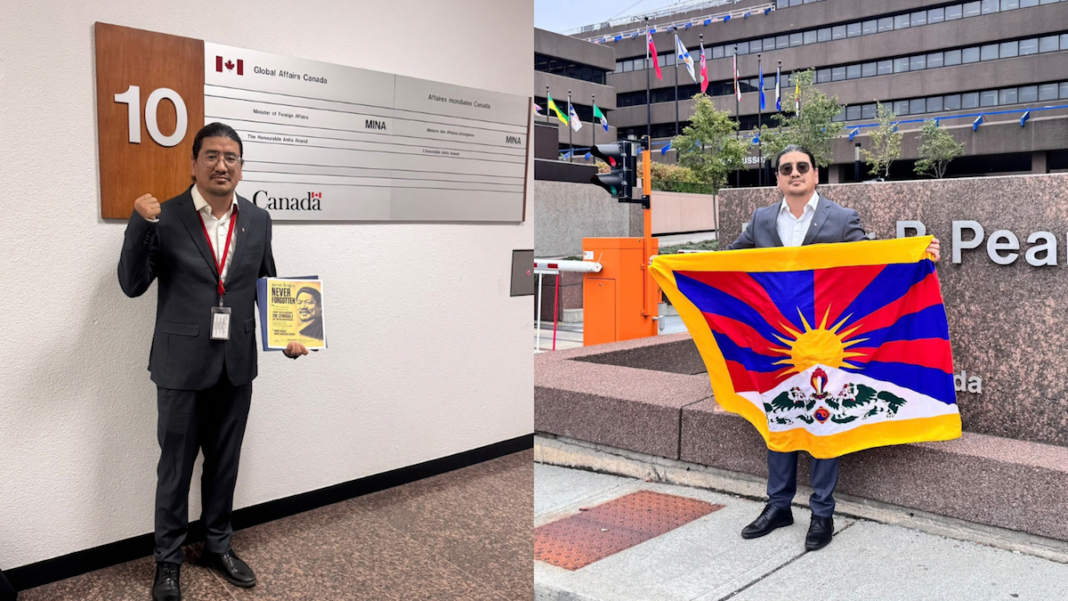
DHARAMSHALA, Sept. 29: Tibetan Canadian activist Youngdoung Tenzin has urged the Canadian government to raise the self-immolation of late Tibetan independence activist Lobga Rangzen at the United Nations and address Tibet-related human rights concerns in its engagement with China.
He made the appeal after meeting with a policy adviser to Canada’s foreign minister in Ottawa, where he briefed Global Affairs Canada on late martyr Lobga Rangzen’s self-immolation outside the United Nations headquarters in New York on July 2, 2026.
In a petition submitted to Canadian Foreign Minister Anita Anand, he called on Ottawa to pursue three key measures: raise Lobga Rangzen’s self-immolation at the UN General Assembly and support a multilateral joint statement on human rights in occuTibet; bring the matter directly to Chinese counterparts during diplomatic engagements; and formally address China’s “Law on the Promotion of Ethnic Unity and Progress,” which he described as an illegal policy and an act of genocide against Tibetans.
He also urged Canada to include Lobga Rangzen’s case and the broader human rights situation in Tibet in Global Affairs Canada’s annual human rights reporting.
He said Lobga Rangzen self-immolated on July 2, 2026, outside the UN headquarters in New York, carrying the Tibetan national flag and calling for an end to Chinese colonial rule in occupied Tibet. He said the UN’s lack of an official response following the incident was deeply concerning and argued that Canada, as a UN member state with a history of supporting Tibetan human rights, should take the issue forward through international diplomatic channels.
The petition also refers to Canada’s historical engagement with the question of Tibet, including its votes in favour of UN General Assembly Resolutions 1353 (1959), 1723 (1961), and 2079 (1965). It further cites the Canadian Parliament’s 2022 motion calling for the resumption of Sino-Tibetan dialogue and its 2024 motion concerning the Tibetan people’s right to self-determination.
He additionally raised concerns about transnational repression, citing his own experience of being sanctioned by the Chinese government in December 2024 for his advocacy for Tibet in Canada. He said he had faced intimidation and death threats but remained committed to advocating for Tibetan rights.
During the meeting, he formally submitted his petition along with an English transcript of Lobga Rangzen’s final live video message. He appealed to Tibetans living in democratic countries to make use of their civic rights and engage with their elected representatives. “Every single one of us has the responsibility to carry forward the aspiration of Pawo Lobga Rangzen,” he said, urging members of the Tibetan diaspora to approach their local members of parliament and foreign ministers and raise the case through democratic channels.

