
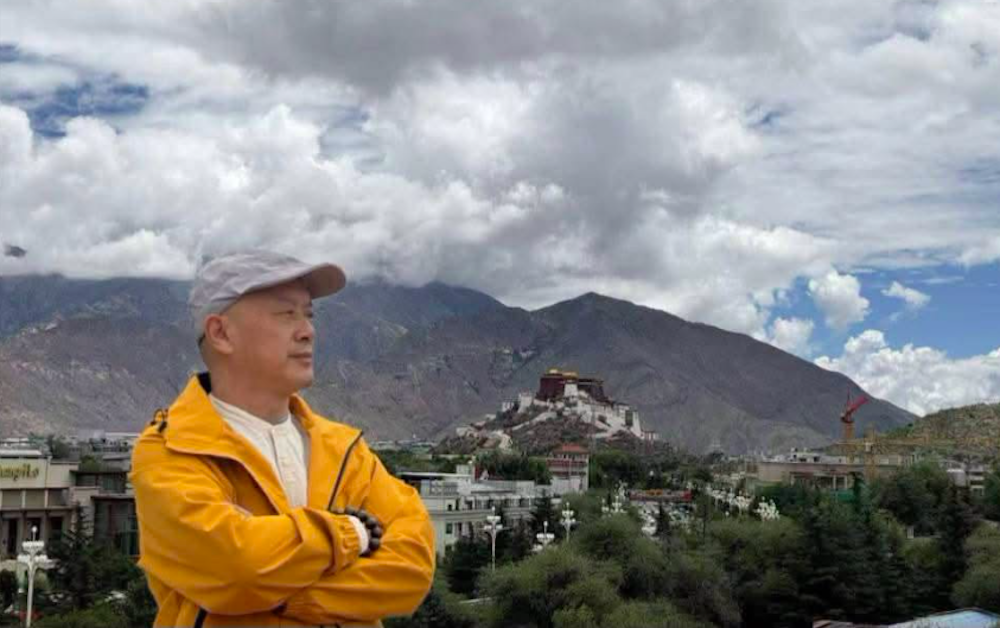

Tenzin Nyidon
DHARAMSHALA, Aug. 7: Human rights watch dog Amnesty International has called on Chinese authorities to immediately release veteran Chinese pro-democracy activist Zhang Yi, condemning his arrest in Tibet after he allegedly showed a photograph of the Tibetan spiritual leader His Holiness the Dalai Lama to a worshipper inside Sera monastery in Lhasa.
In a statement issued following Zhang’s formal arrest, Amnesty International’s Deputy Regional Director Sarah Brooks described the case as “a chilling reminder of how far the Chinese authorities will go to police the peaceful exercise of human rights”.
“This case bears all the hallmarks of the Chinese authorities’ long-standing misuse of the offence of ‘inciting separatism’ to criminalize peaceful expression in Tibet and in relation to Tibetan history, culture, and religious belief,” Brooks said.
She stressed that displaying a photograph of a religious leader should never be construed as a threat to national security, urging Beijing to release Zhang immediately because he has been detained solely for peacefully exercising his fundamental rights.
Amnesty also called on Chinese authorities to ensure that, pending his release, Zhang is granted prompt access to his family and a lawyer of his own choosing, while being protected from torture and other forms of ill-treatment in detention.
According to an arrest notice received by Zhang’s family on August 5, 2026, and reviewed by Amnesty International, the activist was formally arrested on July 28, 2026, on suspicion of “inciting separatism,” while his family was notified by telephone two days later.
Zhang was initially detained on July 1 while visiting Sera Monastery in Lhasa with his younger brother. Amnesty said that after being unable to communicate verbally with a Tibetan worshipper from whom he wished to borrow a prayer mat, Zhang displayed a photograph of the Dalai Lama on his mobile phone. The interaction was reportedly observed by two plainclothes officers, who appeared to record Zhang and his brother as they left the prayer area. Police detained Zhang before he exited the monastery.
On July 18, his family received a Criminal Detention Notice issued by the Lhasa Public Security Bureau, stating that he had been placed under criminal detention on suspicion of “inciting separatism” and was being held at Lhasa Detention Center. Chinese authorities have not publicly disclosed the specific factual basis for the charge.
Amnesty noted that Zhang’s detention coincided with the implementation of China’s Ethnic Unity Law, which came into force on July 1, the same day he was taken into custody. The organization warned that the legislation contains broad and ambiguously worded provisions requiring the promotion of “ethnic unity” and a shared national identity, creating additional legal grounds for curbing freedom of expression, religious belief and cultural rights, particularly among ethnic minorities.
The rights group said Chinese authorities have repeatedly invoked the offence of “inciting separatism” against Tibetans engaged in peaceful activities, including promoting Tibetan-language education, expressing support for religious freedom, or possessing images of the Dalai Lama.

