

Tenzin Nyidon
DHARAMSHALA, Feb. 12: Well-known Tibetan environmental defender and anti-corruption whistle-blower A-Nya Sengdra, who was released from Mianyang Prison on February 7, is reportedly suffering from severe health complications, including vision loss, kidney disease, and high blood pressure, according to a report by the Washington-based advocacy group International Campaign for Tibet (ICT).
The report stated that although he has returned to his family home in Kyangche Township in Gande County, eastern Tibet, he remains under stringent restrictions imposed by Chinese authorities. He and his family are reportedly prohibited from discussing his case publicly or sharing photos and videos of him on social media. Furthermore, Sengdra is reportedly barred from traveling freely to seek urgent medical treatment.
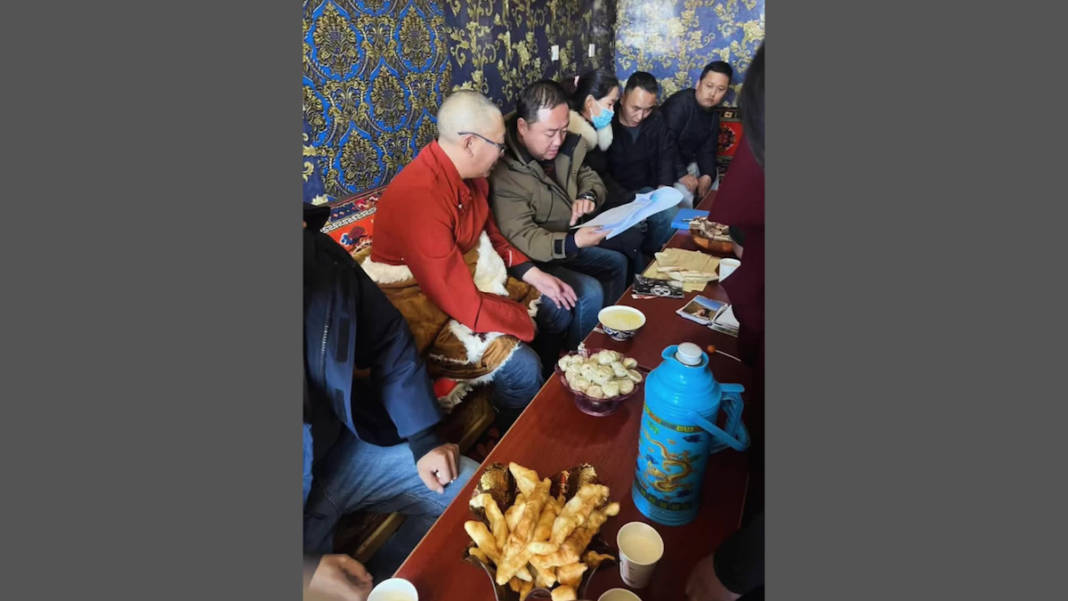
A recently circulated photograph of Sengdra on a social media platform shows him with a shaved head and noticeable weight loss, highlighting concerns about his deteriorating physical condition after years in detention.
Sengdra’s seven-year prison sentence officially concluded on September 3, 2025. However, instead of being released on schedule, he was held for an additional five months without public explanation. Rights groups have described the extension as arbitrary and lacking due process.
Reliable sources cited by human rights organizations indicate that the extension may have been based on alleged “prison rule violations” or theft. No formal judicial proceeding or transparent legal justification has been made public. Organizations, including the International Federation for Human Rights (FIDH), have characterized the extended detention as a violation of international fair trial standards.
A-Nya Sengdra, a nomad by background, rose to prominence as a community leader through his persistent advocacy to protect Tibet’s fragile ecosystem and expose local government corruption. In 2014, he and fellow nomads established a voluntary organization known as Mangdon Ling, meaning “Public Affairs Forum.”
Through Mangdon Ling, Sengdra campaigned against illegal mining operations, the poaching of endangered wildlife, and the misappropriation of public funds by local officials. His efforts focused particularly on the alleged mismanagement of poverty alleviation programs and housing subsidies intended for relocated nomadic communities.
In one notable case, Sengdra questioned the use of 18 million yuan allocated for housing facilities that reportedly were never constructed. Local Tibetans credited his activism and the risks he took, including repeated arrests, with prompting authorities to initiate payments of promised subsidies and minimum livelihood allowances.
Chinese authorities first arrested Sengdra in 2014 on allegations of illegal activities, sentencing him to one year and three months in prison. He was released from Dongchuan Prison in Xining on October 18, 2016. Less than two years later, on September 4, 2018, he was re-arrested on charges of “provoking troubles” and “forming a mob to disturb public order.” These charges, frequently invoked under Article 293 of the People’s Republic of China’s Criminal Law, are widely criticized by rights advocates as tools to silence activists and critics of the state.
During the initial 48 days of his detention, Sengdra was reportedly beaten and denied access to legal counsel. On December 6, 2019, the Gande County Court sentenced him to seven years in prison. His lawyer, Lin Qilei, argued that the charges were unfounded and formed part of a broader crackdown on so-called “underworld forces,” a campaign critics say has been used to suppress political dissent and cultural expression in Tibet.
Throughout his incarceration, reports consistently indicated a steady decline in his health. Family members were denied visits for years and were only permitted a brief meeting in August 2025. They described him as frail and suffering from high blood pressure, adding that he did not receive adequate medical care while in custody.

