

Tenzin Nyidon
DHARAMSHALA, Oct. 14: India has reaffirmed that Ladakh, which shares a border with occupied Tibet, is an “integral and inalienable” part of the country after China objected to New Delhi’s decision to standardise the names of 28 geographical locations and features in the strategically sensitive Himalayan territory, reigniting a long-running dispute over territorial claims, official maps and geographical nomenclature.
The Ministry of External Affairs (MEA) issued the rebuttal on Tuesday, hours after Chinese Foreign Ministry spokesperson Mao Ning denounced India’s naming initiative as “illegal and invalid” and reiterated Beijing’s claim over areas along the western sector of the China–India boundary.
“It is reiterated that the UT of Ladakh is an integral and inalienable part of India. No amount of denial by the Chinese side can change this established fact,” MEA spokesperson Randhir Jaiswal said, referring to the Union Ministry of Home Affairs’ announcement on the naming exercise.
The MEA spokesperson said the standardisation initiative, undertaken in consultation with the Ladakh administration and local stakeholders, aimed to enable accurate identification of geographical features and improve public awareness by formally including them on Survey of India maps.
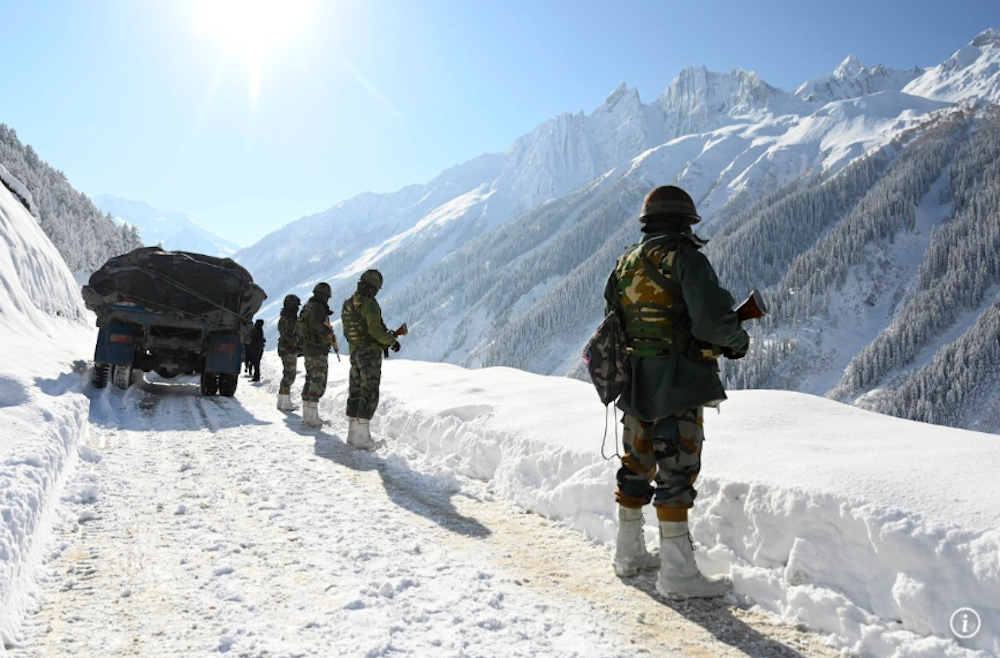
On October 2, India’s Ministry of Home Affairs announced the standardisation of 28 geographical locations and features in Ladakh. According to ThePrint, the list comprises 10 peaks, two mountain passes, seven land areas, three mountains, two water bodies, two glaciers, a valley and a river. Among the locations identified are Gogra and Hot Springs, two strategically sensitive friction points along the Line of Actual Control (LAC) that figured prominently in the military standoff between Indian and Chinese forces in eastern Ladakh in 2020.
New Delhi presented the initiative as an administrative and geographical standardisation exercise, emphasising accurate identification and public awareness. Beijing, however, has rejected the move, arguing that assigning official names cannot alter what it regards as the territorial status of the disputed areas.
“China has never recognised the so-called ‘Union Territory of Ladakh’ unilaterally and illegally established by India,” Mao said, according to reports of her remarks. She further asserted that the relevant areas in the western sector of the China–India boundary had always belonged to China, describing India’s naming initiative as invalid.
The dispute comes against the backdrop of the deadly military confrontation in eastern Ladakh in June 2020, when clashes in the Galwan Valley resulted in the deaths of 20 Indian soldiers and four Chinese soldiers, according to publicly reported figures. The confrontation plunged bilateral relations into a prolonged period of strain.
Although the two countries have since pursued diplomatic and military-level engagement to manage tensions and address outstanding boundary issues, competing territorial claims continue to complicate efforts to establish a durable settlement.
The latest exchange demonstrates that the contest over the Himalayan frontier extends beyond troop deployments and diplomatic negotiations. Official maps, place names and administrative designations have also become instruments through which New Delhi and Beijing articulate their respective claims—without, in themselves, resolving the underlying boundary dispute.
The confrontation also forms part of a broader pattern of competing geographical naming initiatives that have unfolded along the disputed frontier since 2017.
China has issued successive lists of standardised names for locations in territories claimed by India, including Arunachal Pradesh, which Beijing refers to as “Zangnan,” or “southern Tibet”. Beijing has justified these exercises by citing its domestic regulations on geographical names, while New Delhi has consistently rejected the claims and described China’s naming efforts as inventions that do not alter the territorial status of the places concerned.

