

Tenzin Nyidon
DHARAMSHALA, March 25: A bill seeking amendments to the ‘Rules and Regulations for Parliamentary Procedures and the Conduct of Business’ was dropped after failing to secure the necessary two-thirds majority from the parliament on the ninth day of the ongoing parliamentary session of the Tibetan Parliament in Exile on Wednesday.
Continuing with the legislative agenda, the house took up the second reading of the amendment bill, which had earlier been deferred during both the 9th session in March and the 10th session in September of the previous year.
The bill, tabled by MP Karma Gelek and supported by fellow MP Ratsa Sonam Norbu, sought to address procedural aspects related to parliamentary functioning, particularly provisions tied to leadership changes within the exile Tibetan government, officially known as the Central Tibetan Administration (CTA).
During the deliberations, members presented sharply differing views, reflecting a clear divide within the House over the necessity and implications of the proposed changes. Several members of Parliament strongly opposed the proposal, arguing that provisions under Chapter 17 of the Rules of Procedure and Conduct of Business, especially Clause 5 concerning the removal or change of leadership, including the President, Ministers, or the entire Cabinet, could potentially allow even a single MP to arbitrarily target and destabilize the leadership without sufficient grounds.
Opposition MPs further contended that there is no immediate need for such changes and warned that the amendment could be misused for personal or political interests, potentially serving as a tool to defame leadership rather than strengthen democratic institutions or improve governance.
In contrast, members of parliament who expressed strong support for the amendment pointed out that while the Charter of the Tibetans in Exile already provides for the removal or change of leadership, it lacks clearly defined procedures for implementation. They argued that it is the responsibility of Parliament to establish clear procedural guidelines, which are essential for maintaining the balance among the three pillars of democracy.
They also noted that the proposed amendment draws on past experiences and challenges, seeking to clarify existing provisions. They expressed the view that adopting a defined procedural framework would create a foundation for further refinement in the future.
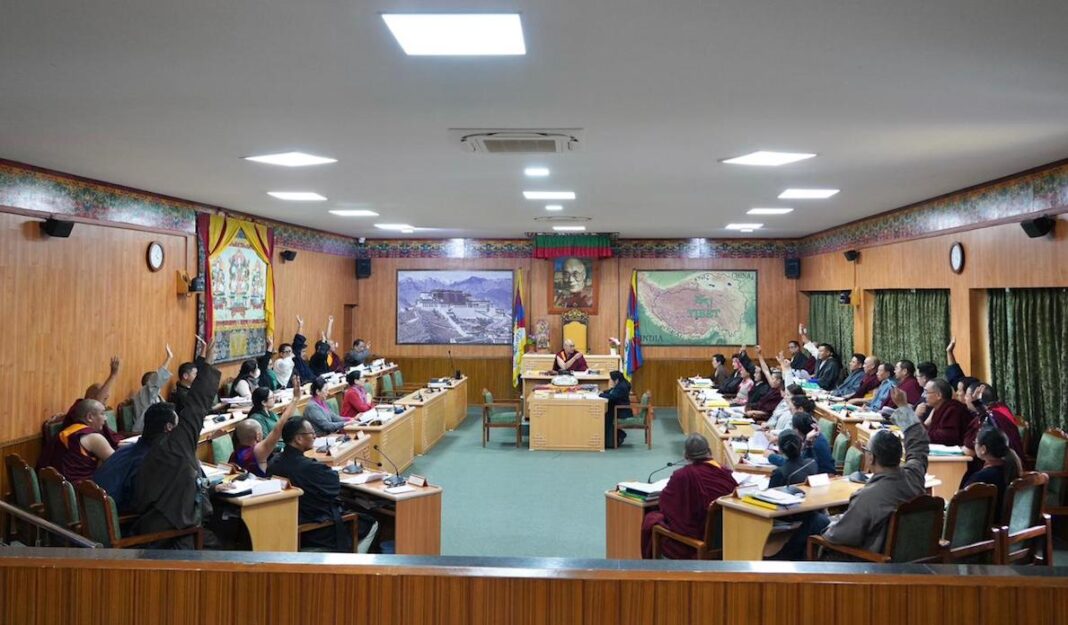
The amendment bill, along with its first-degree and second-degree amendments, was subsequently put to a vote. However, it received support from only 23 members, falling short of the required two-thirds majority.
Notably, the proposed amendments had already undergone three stages of committee review and were based on earlier deliberations, having been deferred during the ninth session of Parliament. Despite these efforts, the house remained divided, and the bill ultimately failed to secure approval.

