

Tenzin Nyidon
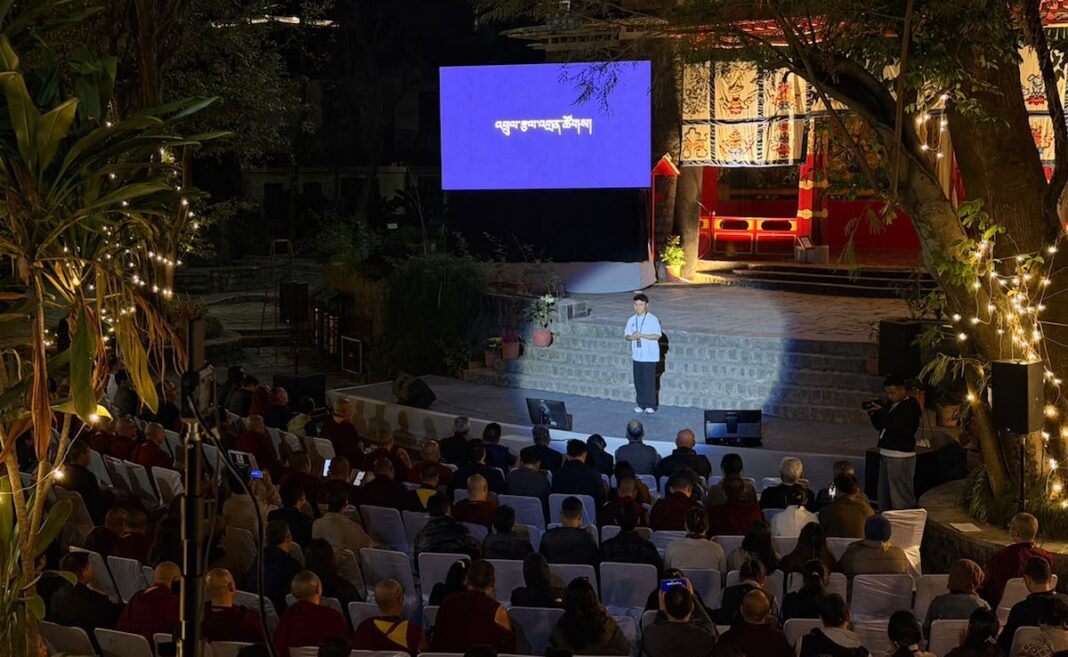
DHARAMSHALA, Nov. 4: The Dharamshala-based Monlam IT Research Centre on Tuesday unveiled a suite of new artificial intelligence (AI) and digital technologies aimed at expanding the presence of the Tibetan language in the digital sphere, including Monlam AI Studio, at the fourth edition of Monlam Manifest held at Norbulingka Institute.
The event showcased several technological developments, including Monlam Bodyig 5.0, featuring four new Tibetan fonts—Vartu, Soryang, Typewriter 1 and Typewriter 2; an enhanced Melong Web and App with improved speech-to-text capabilities across the three major Tibetan dialects of U-Tsang, Amdo and Kham, alongside its converse with Melong feature; the Monlam Translate App; the Monlam Grand Dictionary; and Monlam AI Studio.
Speaking to Phayul following the unveiling, Kelsang Dolker, Product and Communication Officer at the Centre, emphasised that its approach to technological development goes beyond introducing products, focusing instead on their continued improvement and expansion.
She identified Monlam AI Studio as one of the Centre’s most significant milestones, describing it as a platform designed to make its AI ecosystem accessible to a wider developer community. She said the platform had already facilitated the development of several new applications and games during a recent hackathon organised by the Centre.
“Everyone interested in making an app with the Tibetan language as part of it can use our platform to create those products,” she said, describing the initiative as a significant step towards encouraging wider participation in Tibetan-language technological innovation.
The growing use of artificial intelligence has also raised concerns about the representation of Tibetan history, identity and political realities in AI-generated content, particularly amid China’s expanding investment in AI technologies and the influence of state policies on digital information.
Phayul asked what measures the Centre was taking to ensure that its Tibetan-language AI models accurately represented Tibetan history and perspectives, and whether it was working to counter potential misinformation and disinformation originating from Chinese state-backed narratives, Dolker acknowledged that directly challenging those narratives had not been the Centre’s approach so far.
Kelsang said the organisation had prioritised building its AI systems on data sourced from the Tibetan community, established researchers and subject experts. Its large language models (LLMs), she explained, are also evaluated by recognised scholars and specialists from the Tibetan exile community to ensure the reliability and authenticity of their outputs.
“What we have done is make sure that all our data comes from our community and renowned researchers. With our LLMs, we have evaluators and subject experts who are renowned scholars in our community in exile,” she said.
Emphasising the importance of community participation in developing reliable Tibetan-language AI systems, she said the Centre had received considerable support from Tibetans willing to contribute data and other resources. She added that the objective was to develop AI models capable of communicating in Tibetan while reflecting the language, historical understanding and perspectives of the Tibetan community.
The launch of Monlam AI Studio comes amid growing attention to competing developments in Tibetan-language artificial intelligence, particularly China’s DeepZang AI platform, which was launched in March this year.
According to an analysis by the Washington-based rights group International Campaign for Tibet, titled “DeepZang: The Digital Propaganda Front in China’s Tibet Narrative,” the platform’s responses to questions concerning sensitive topics, including Tibetan history, the exiled Tibetan spiritual leader His Holiness the Dalai Lama, Tibetan independence, the Tibetan national anthem, and self-immolations, either echo the Chinese government’s official positions or refuse to respond, citing legal restrictions.
Meanwhile, China’s state-run media outlet Global Times described DeepZang AI as the world’s first large language model developed in the Tibetan language. However, the Dharamshala-based Monlam Tibetan IT Research Centre had ventured into Tibetan-language AI development as early as 2023 with the launch of Monlam AI. Since then, it has developed a range of AI-powered tools for Tibetan, including machine translation, speech recognition, text-to-speech, and optical character recognition (OCR).

