

Tenzin Nyidon
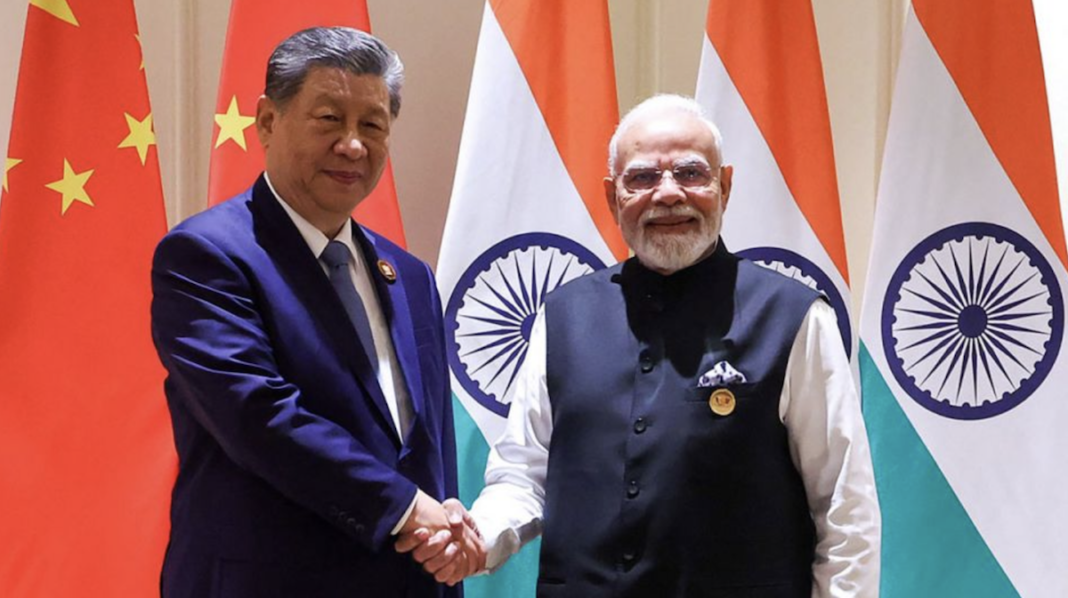
DHARAMSHALA, Sept. 17: Chinese Foreign Ministry Spokesperson Guo Jiakun has claimed that Indian Prime Minister Narendra Modi assured Chinese President Xi Jinping that India would not allow its territory to be used for “anti-China activities,” following their bilateral meeting on September 12 on the side-lines of the BRICS Summit in New Delhi.
“Prime Minister Modi said that India has an independent foreign policy, developing relations with China is not affected by any third party and that it will not allow any force to engage in anti-China activities on its territory,” Guo said at a press conference in Beijing on Monday.
The Chinese account also said that India’s policy and position on issues concerning Tibet and Taiwan remained unchanged. The reference to Tibet is notable given India’s long-standing hosting of the Tibetan exile community and the space historically afforded to Tibetan organisations to conduct political advocacy, demonstrations and public events.
However, India’s official readout of the Modi-Xi meeting does not mention any such assurance on “anti-China activities.” The Indian account instead said the two leaders agreed that bilateral ties should be viewed from a “strategic and long-term perspective” and that “differences should not become disputes.” Modi reiterated that India-China relations should be guided by “mutual respect, mutual sensitivity and mutual interest.”
The Chinese claim comes days after the Tibetan Youth Congress (TYC) and Students for a Free Tibet (SFT) staged protests against Xi’s visit in New Delhi, during which dozens of Tibetan activists were detained by Delhi Police. The timing has drawn particular attention to the possible implications of Beijing’s characterization of “anti-China activities” for Tibetan political activity in India.
The Modi-Xi meeting comes as New Delhi and Beijing seek to consolidate a gradual thaw in bilateral ties following years of tensions triggered by the deadly 2020 Galwan Valley clash along the disputed India-China border. Relations began to improve after the two sides reached an agreement in October 2024 that facilitated disengagement in the eastern Ladakh sector, although significant differences remain.
During the September 12 meeting, Modi stressed that peace and tranquillity in the border areas remained an “essential basis” for the continued development of bilateral relations and called on both sides to observe existing agreements and understandings concerning the border. The two leaders also expressed commitment to pursuing a “fair, reasonable, and mutually acceptable” resolution of the boundary question.
The leaders also discussed expanding people-to-people ties, cultural exchanges, business linkages, and greater mobility between the two countries. On economic and trade relations, they agreed on the need to address concerns including the structural trade imbalance, supply-chain issues, and the facilitation of meaningful and predictable market access.
The meeting was Xi’s first visit to India since 2019 and marked another step in efforts to stabilise relations after the 2020 military confrontation. Bilateral trade has rebounded despite continued tensions, while institutional exchanges, flights and people-to-people contacts have gradually resumed. However, reports say, unresolved border issues, trade imbalances, and strategic mistrust continue to complicate the relationship.
China has meanwhile sought to frame the renewed engagement in broader terms. Chinese Foreign Minister Wang Yi said the two leaders reached a key consensus that India and China should regard each other as “partners rather than rivals,” reflecting Beijing’s push for a broader reset in bilateral relations.

