

Tenzin Nyidon
DHARAMSHALA, Sept. 2: The exile Tibetan government, officially known as the Central Tibetan Administration (CTA), on Wednesday commemorated the 66th anniversary of Tibetan Democracy Day at the Tsuglagkhang Temple in Dharamshala, reaffirming the democratic institutions established under the visionary leadership of His Holiness the Dalai Lama.
The commemoration brought together representatives of the three pillars of the Tibetan democratic system—the CTA President Penpa Tsering and members of his Cabinet, elected members of the Tibetan Parliament-in-Exile, and judges of the Tibetan Supreme Justice Commission—along with members of the Tibetan community and 30 Chinese pro-democracy activists. Among the Chinese activists was Dang Yang, a veteran of the 1989 Tiananmen Square protests who was subsequently imprisoned twice by the Chinese Communist government.
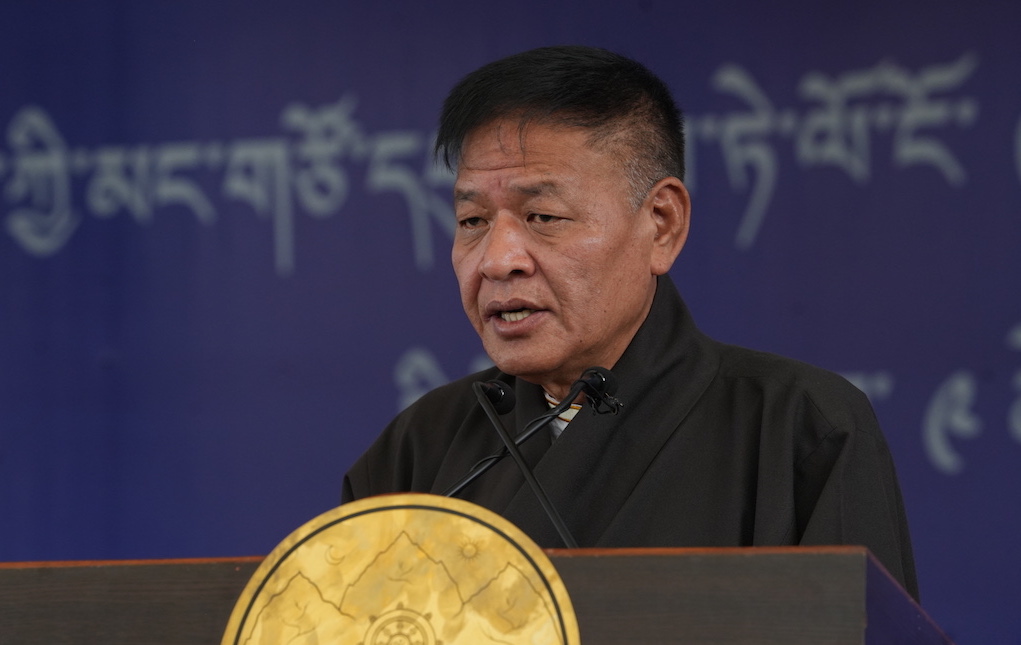
Addressing the gathering, the Tibetan political leader condemned China’s newly implemented Law on Promoting Ethnic Unity and Progress, which came into effect on July 1, warning that the legislation and accompanying policies warrant a firm and appropriate response. “These include severe restrictions on the Tibetan language; the falsification of history and identity; forced cultural assimilation at the grassroots level; the Sinicisation of Tibetan Buddhism; enforced ethnic integration; pervasive technological surveillance; political and social coercion; the political vetting of Tibetan cadres; the violation of regional autonomy rights; and the assertion of extraterritorial jurisdiction targeting organisations and individuals worldwide,” the Tibetan leader said.
He said the Chinese Communist government’s policies since its colonial occupation of Tibet have consistently sought to undermine Tibetan identity, particularly through restrictions on language, religion, and culture. Urging Tibetans both inside Tibet and in exile to make the preservation of their heritage part of everyday life, he called for greater participation in institutional initiatives to safeguard the Tibetan language and cultural identity.
“On our part, it is not enough merely to declare opposition and protest; we must expose and confront these malicious policies based on a well-informed understanding. We therefore urge all Tibetans to join the Central Tibetan Administration in these vital efforts,” he stated.
Dang Yang, speaking at the commemoration, described the Tibetan democratic system as a model of democratic resilience and said its experience offered important lessons to China’s pro-democracy movement. “The Tibetan experience has demonstrated to the world that even without a territory under its actual control, without an army, a democratic system can still function successfully and generate powerful political influence,” Dang said.
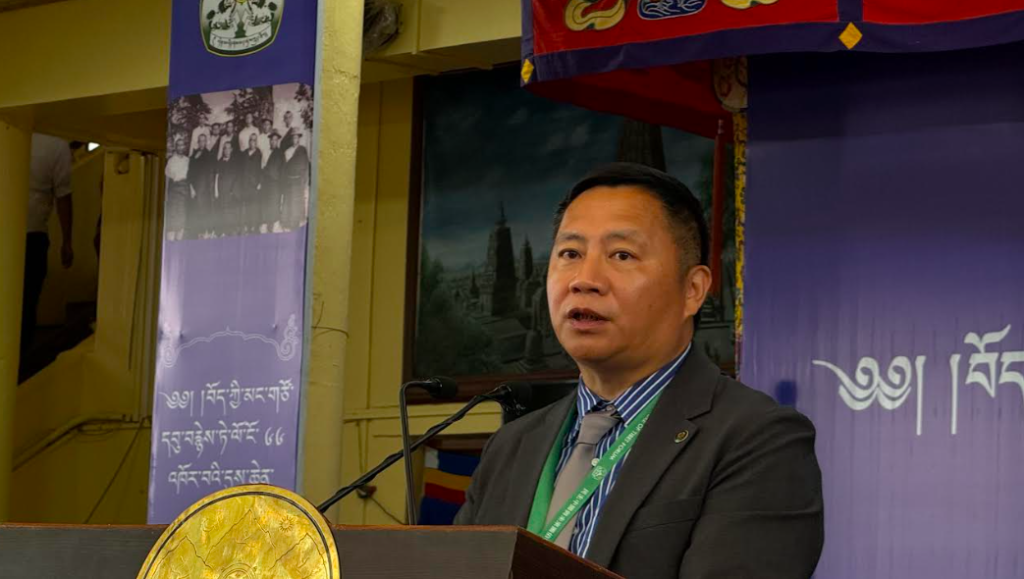
He contrasted the Tibetan exile administration’s democratic legitimacy with what he described as the Chinese Communist Party’s reliance on “violence, lies, and control.” “The Tibetan community in exile, by contrast, relies on the recognition of its people, democratic legitimacy, and the cohesion of its institutions,” he said.
Dang sated that the Tibetan democratic system has helped unite Tibetans dispersed across the world and ensured the continuity of their political voice across generations. “It is precisely this democratic system that has brought together Tibetans scattered across the world, generation after generation. It has ensured that the Tibetan voice has not been silenced by the Chinese Communist Party, and that the Party has never been able to represent the Tibetans or determine their future,” he said.
Dang also announced plans for the establishment of a China Congress, a proposed democratic representative institution outside the framework of the Chinese Communist Party. He said the initiative has not yet been formally established but has already attracted more than 1,000 founding electors. “We hope to begin a democratic practice belonging to the Chinese people outside the system of the Chinese Communist Party, and to accumulate experience about China’s future democratic transition and constitutional development,” he said.
He said China’s democracy movement could draw particularly from the Tibetan Parliament-in-Exile’s experience of electoral representation. “The Tibetan experience of election has enabled representatives with a mandate from the electorate to continue making their voices heard in the international community,” Dang said, adding that China’s democracy movement has yet to develop a representative institution with a comparable electoral foundation.
Looking ahead to a possible democratic transition in China, Dang said a future Chinese political system must abandon coercive policies towards Tibetans and instead respect their cultural, religious and national identity. “A future democratic China must never again treat Tibetans through oppression or forced assimilation. Instead, it must respect the Tibetan people’s culture, religion, language, national identity, and fundamental rights,” he said.
He called for future relations between the Chinese and Tibetan peoples to be founded on equality and peaceful dialogue rather than political domination. Dang further proposed establishing a sustained platform for dialogue between Tibetans and Han Chinese living overseas, covering political and cultural questions related to Tibet as well as the future spiritual and cultural relationship between the two peoples. He concluded by expressing hope that Tibetans and Chinese alike would eventually be free from authoritarian rule and able to determine their own futures.
The Tibetan democratic system began taking shape soon after the Dalai Lama arrived in India in exile. The process formally began with the establishment of the Commission of Tibetan People’s Deputies in 1960, followed by the drafting of constitutional frameworks in 1961 and their promulgation in 1963.
A major milestone came in 1991 with the adoption of the Charter of Tibetans-in-Exile, which established a democratic system founded on the separation of powers and independent institutions. In 2001, Tibetans began directly electing the head of the Kashag, or Cabinet. A decade later, in 2011, the Dalai Lama devolved his remaining political and administrative authority and transferred it fully to democratically elected Tibetan leaders.

