

Tenzin Nyidon
DHARAMSHALA, Dec. 31: Ireland’s military intelligence agency has cautioned the country’s universities about potential risks linked to academic and research engagement with China, according to recent media reports. The warning, delivered through confidential briefings to senior university officials, marks a rare public acknowledgment that Ireland’s security services are actively assessing foreign influence and espionage risks within the higher education sector, particularly in areas involving sensitive research.
The disclosures emerged from an interview given by a senior officer of the Irish Military Intelligence Service (IMIS) to The Sunday Times. In the interview, the officer stated that Irish intelligence had briefed university leaders on the dangers of certain collaborations with China, particularly research that could have “dual-use” applications, meaning work that may appear civilian but could also be used for military or security purposes. The official stressed that sharing advanced technical knowledge without sufficient safeguards could ultimately undermine the security interests of Ireland and its partners.
According to the report, the intelligence briefings focused on risks such as espionage, intellectual property theft, cyber activities, and covert influence operations. China and Russia were identified as the main state actors of concern. The IMIS official stated that Irish intelligence had already disrupted some foreign intelligence activities in the country, although such cases were handled discreetly, often without arrests, to protect national security and diplomatic sensitivities.
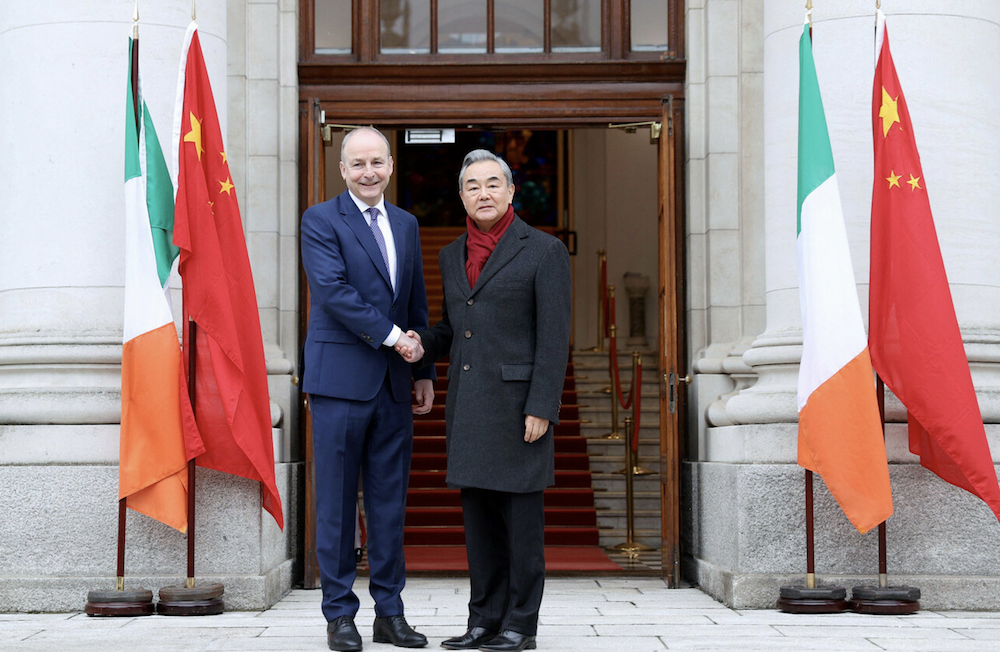
The remarks sparked political attention in Ireland, with Taoiseach (Prime Minister) Micheal Martin publicly responding to the reports. While acknowledging that intelligence assessments must be taken seriously, Martin pushed back against portraying China as a “hostile” state. He underlined Ireland’s significant economic and trade relationship with China and emphasized that the government’s approach remains one of engagement combined with caution, rather than outright confrontation.
The issue has also drawn international and academic reactions. Chinese state-linked commentators criticised the intelligence warnings, arguing that they risk undermining Ireland’s long-standing policy of neutrality and could harm academic cooperation. At the same time, security experts note that Ireland’s concerns are not unique, as several Western countries have in recent years issued similar advisories to universities about safeguarding sensitive research and protecting academic freedom from foreign interference.
Critics say that for Irish universities, the intelligence warnings may lead to stricter scrutiny of foreign funding, partnerships, and research collaborations, particularly in fields such as technology, artificial intelligence, engineering, and cybersecurity. More broadly, the episode highlights the growing tension faced by democratic societies in balancing open academic exchange and economic cooperation with the need to protect national security in an increasingly complex geopolitical environment.

